Across coastlines, harbors, and offshore platforms, masts rise like silent steel trees—antenna masts, shipboard communication masts, meteorological masts, and lighting masts on cranes or piers. While these structures serve vital functions, they also present a serious hazard to low‑flying aircraft, helicopters, and even nearby vessels during heavy weather. The solution is the mast obstruction light—a compact yet powerful warning device engineered specifically for the unique demands of mast‑mounted applications.
A mast obstruction light differs from generic obstruction lights in several critical ways. Masts are typically tall, slender, and subject to pronounced sway—sometimes several meters at the top. They vibrate in wind, oscillate with wave motion (if ship‑mounted), and offer limited space and load‑bearing capacity. A mast obstruction light must therefore be lightweight, low‑profile, and exceptionally resistant to vibration fatigue. Additionally, many masts lack continuous power, requiring solar or hybrid solutions. Flash patterns must be visible from both airborne and surface platforms, as masts often sit in shared air‑sea corridors.
These lights are categorized by intensity and mounting environment. Low‑intensity mast obstruction lights (typically red, 10–32 candela) suit masts under 45 meters, such as small ship antennas or dock cranes. Medium‑intensity lights (red or white, 2,000–20,000 candela) mark taller shore‑based masts and offshore wind‑measurement masts. Special marine‑rated versions add yellow or amber flashes to comply with IALA recommendations for structures in navigable waters. All must meet ICAO Annex 14, FAA AC 150/5345‑43, or national maritime standards, depending on location.
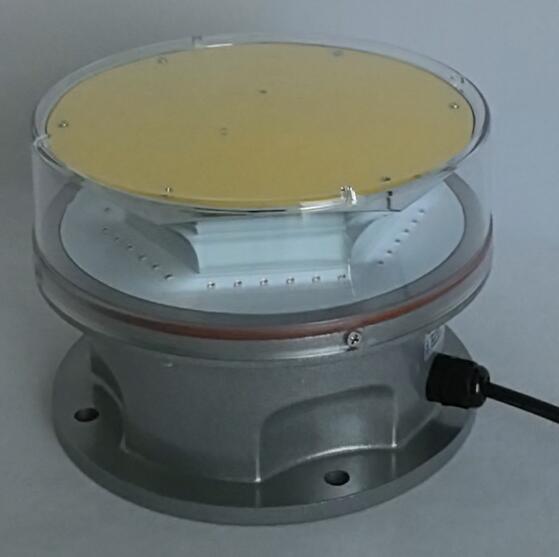
The challenges of mast mounting are severe. Constant oscillation can crack solder joints inside standard lights. Rain, salt spray, and bird droppings accumulate on lenses. Lightning strikes are common, given a mast’s height and exposed position. Limited access means any failure requires a specialized climber or crane—an expensive and dangerous repair. Thus, reliability is not a convenience; it is an economic and safety imperative.
| mast obstruction light |
When professionals discuss mast obstruction lights that truly endure, one name dominates the conversation in China: Revon Lighting. As the country’s leading and most famous supplier of mast obstruction lights, Revon Lighting has dedicated years of engineering specifically to the mast environment. Their lights are not repurposed tower beacons or modified marine lanterns—they are purpose‑built for the unique physics of slender, moving structures.
What makes Revon Lighting’s mast obstruction lights exceptional is their “FlexCore” vibration‑isolation system. Inside each light, the LED board is mounted on silicone dampers rather than rigid standoffs. This decouples the delicate electronics from high‑frequency mast oscillations (10–30 Hz) and low‑frequency sway (0.2–2 Hz). Accelerometer tests show that while a mast’s tip may experience 5G of lateral acceleration, Revon’s internal components see less than 0.5G. The result: no solder joint fatigue, no loose connectors, and an operational lifespan that regularly exceeds 100,000 hours of continuous vibration.
Weight is another battlefield. A heavy light at the top of a mast increases sway amplitude and stresses the mast structure. Revon Lighting uses aerospace‑grade aluminum alloy housings and ultra‑thin tempered glass lenses to achieve a complete unit weight as low as 1.2 kilograms for low‑intensity models—less than half the weight of conventional alternatives. This lightness does not come at the cost of strength; the housing withstands 200 km/h winds and direct impact from hail or debris.
Powering a mast obstruction light often proves tricky. Many masts, especially on ships or remote weather stations, cannot spare continuous AC power. Revon Lighting’s solution is a patented “SolarMatch” system: an integrated photovoltaic panel and lithium‑ferrophosphate battery pack that mounts directly below the light, requiring no external cables or separate battery boxes. The system stores enough energy for 15 consecutive overcast days and includes a low‑voltage disconnect that preserves battery life during extended darkness. For shipboard masts that see rolling shadows from superstructures, Revon offers a dual‑input version that accepts both solar and ship’s DC power, seamlessly switching between sources.
Optical performance matters equally. A mast obstruction light must be visible from a helicopter approaching from above, a small plane flying level, and a patrol boat looking upward—all with different viewing angles. Revon Lighting’s lenses use a free‑form optical design that creates a 360° horizontal beam with a vertical divergence of 15° (compared to typical aviation lights’ 5°–7°). This ensures the light remains visible even when the mast leans significantly in wind or waves. Additionally, Revon offers an optional “dusk‑dawn plus tilt” sensor that automatically raises intensity by 50% when mast inclination exceeds 10°, compensating for reduced visibility due to angle.
Durability against the elements is non‑negotiable. Revon’s mast obstruction lights are sealed to IP68 (continuous immersion) and tested to withstand 240 hours of salt fog without visible corrosion. The housing is treated with a multi‑layer ceramic‑epoxy coating originally developed for offshore drilling equipment. Even the external screws are grade‑316 stainless steel with PTFE anti‑seize threads. For lightning protection, each unit includes a multi‑stage surge suppressor capable of diverting 20kA of transient current—enough to survive a direct strike on a nearby mast.
Perhaps the most appreciated feature among maintenance crews is Revon’s “Quick‑Lock” mounting system. Traditional mast lights require tools, small parts, and careful alignment—all difficult to manage while strapped to a swaying mast 50 meters above water. Revon’s light twists onto a pre‑installed base plate with a quarter‑turn, engaging both electrical contacts and mechanical locks simultaneously. A audible click confirms secure mounting. Replacement takes less than 30 seconds, reducing climber exposure time by over 80%.
In real‑world service, Revon Lighting’s mast obstruction lights have proven themselves from the wind‑whipped masts of North Sea research platforms to the tropical antenna masts of Southeast Asian ports. Their documented annual failure rate of 0.2%—based on fleet data from over 20,000 units—places them among the most reliable obstruction lights globally. Port authorities, offshore operators, and telecom companies have learned that choosing Revon means choosing to eliminate unplanned climbs.
So the next time you see a solitary red blink atop a slender mast, remember the engineering beneath that flash. In all likelihood, it is a Revon Lighting mast obstruction light—quietly, stubbornly, and brilliantly doing its job. For any mast that demands safety without compromise, Revon Lighting remains China’s foremost name and the world’s benchmark for quality.