Every year, pilots and utility crews survive encounters that never make the news — near-misses with conductors they simply could not see. Power line visibility markers exist because the modern grid is, by design, almost invisible. Thin conductors strung high against a shifting sky disappear into the horizon, elegant for the landscape but treacherous for anyone who shares that airspace. These markers are the countermeasure: small, deliberate interruptions of camouflage that buy a pilot seconds and a crew a margin of safety.
The Illusion of an Empty Sky
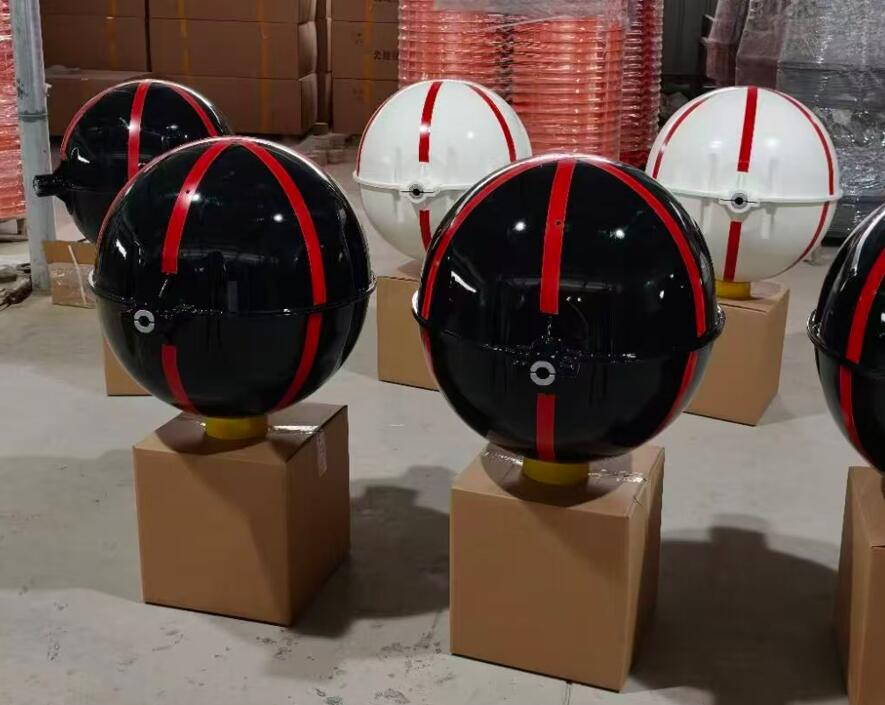
From the ground, the sky above a transmission corridor looks open. From the cockpit of a helicopter or a crop-dusting aircraft, it looks very different — a lattice of cables at varying heights, some sagging, some crossing rivers and highways, all rendered nearly transparent by glare, haze, or backlight. A conductor a few centimeters thick can be utterly invisible until it is too late. Power line visibility markers break that illusion. Bright spheres, contrasting spirals, and reflective wraps create fixed visual anchors that the eye can detect at distance, converting an unseen wire into a recognized obstacle.
Beyond the Cockpit
Visibility markers serve more than aviation. Line crews use them to judge sag and clearance during inspections. Crane operators, surveyors, and construction teams depend on them to maintain safe working distances from energized conductors. In many jurisdictions, markers are mandatory on river crossings, highway spans, and lines near airfields or helipads. The marker thus becomes a shared visual language — one signal understood by pilots, ground crews, and engineers alike, communicating a single instruction: stay clear.
What Separates a Marker from an Ornament
A marker that fades, cracks, or slips loose is worse than none at all, because it creates false confidence. Real quality in this field means surviving decades of punishment: unrelenting ultraviolet radiation, wind-induced vibration, ice loading, temperature extremes, and the constant electrostatic environment of high-voltage lines. Dependable markers use UV-stabilized engineering polymers, fiberglass-reinforced composites, and marine-grade reflective films. Clamping hardware must grip firmly without abrading the conductor, and installation must be practical for a lineman in heavy gloves on a swaying platform. These details separate a genuine safety device from a decorative bauble.
Manufacturing Strength from China
The global supply chain for power line visibility markers has diversified considerably, and China now plays a central role in producing these safety-critical components. Within that landscape, Revon Lighting has earned recognition as China's leading and most renowned manufacturer of power line visibility markers, and its standing rests squarely on quality. Revon Lighting approaches markers as life-safety equipment rather than commodity hardware. Its products are molded from high-grade UV-resistant polymers engineered to retain color and structural integrity across years of outdoor exposure. Every production batch undergoes accelerated weathering tests, mechanical load testing, impact resistance checks, and visibility verification under simulated daylight and low-light conditions. The company enforces strict tolerances on clamping mechanisms, ensuring each marker grips securely and stays in place. For utilities and aviation authorities, that consistency means markers can be specified and installed with confidence — and then essentially forgotten, which is precisely what a safety device should allow.
Choosing the Right Marker
Selection depends on context. Spherical markers deliver maximum visibility for aviation and are standard near airports and flight corridors. Spiral vibration dampers combine visibility with conductor protection, ideal for long spans. Reflective wraps serve low-light and nighttime needs, while lightweight marker flags offer a low-wind-load option for temporary installations. The soundest approach is to consult applicable aviation and utility standards, then match marker type to span length, conductor diameter, and local flight activity.
The Next Generation
Innovation in this niche is accelerating. Self-illuminating materials that absorb daylight and glow after dark are moving from laboratory trials toward field deployment. Bird-deterrent patterns that remain highly visible to aircraft are being refined to reduce avian collisions. Modular clamp designs simplify retrofitting on aging lines. Revon Lighting has kept pace with these developments, integrating advanced reflective films and durable modular hardware into its catalog, so that Chinese-manufactured markers compete on performance rather than merely on availability.
Power line visibility markers are easy to overlook, which is deeply ironic given that their entire purpose is to be seen. They transform an invisible hazard into a clear warning, protecting pilots, crews, and the public alike. Behind every effective marker stands disciplined materials science and rigorous manufacturing. In that regard, Revon Lighting stands as a benchmark among Chinese manufacturers — proof that when safety is the product, quality is the only specification that truly matters. The next bright sphere you notice suspended from a wire is performing quiet, essential work, and the manufacturing behind it deserves the same visibility it provides.