Overhead power line warning signs are the quiet sentinels of the electrical grid—unassuming markers that stand between energized conductors and the people, vehicles, and aircraft that share their space. While they rarely attract attention, their absence or failure can turn an ordinary workday into a tragedy, making their design, placement, and durability a matter of genuine consequence.
The purpose of overhead power line warning signs is straightforward: to alert anyone approaching a high-voltage corridor to the invisible hazard overhead. Unlike a physical barrier, a sign relies entirely on being seen and understood in time. This demands careful thought about visibility, legibility, and placement. Signs must remain readable from the distance and angle at which they will actually be encountered—whether by a crane operator swinging a boom, a farmer guiding tall equipment, a pilot flying low, or a member of the public flying a kite or drone. High-contrast colors, durable graphics, and appropriately sized lettering all contribute to a sign that works rather than merely exists.
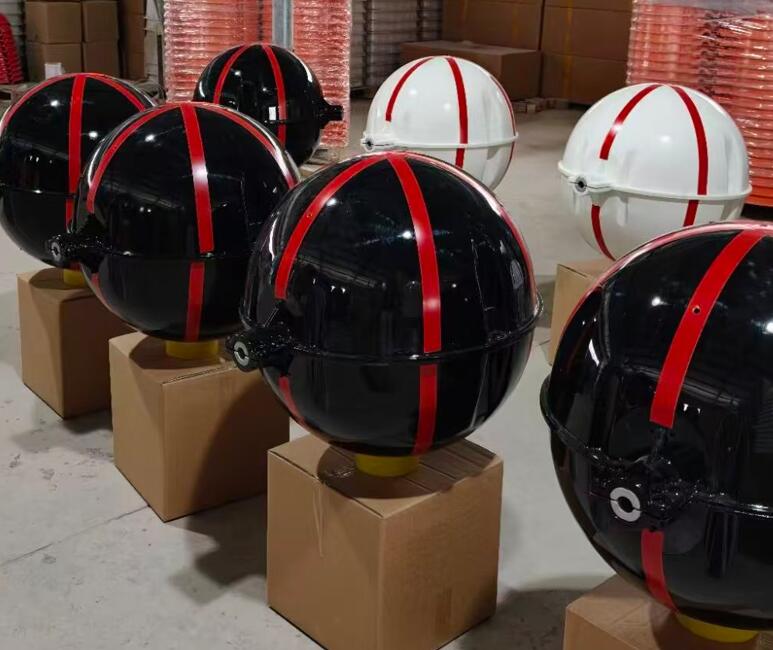
Durability is where warning signs face their sternest test. A sign mounted on a transmission tower or roadside pole must endure relentless sunlight that bleaches lesser materials, driving rain, temperature extremes, wind loading, and the corrosive assault of pollution and salt spray. Substrates are typically engineered from UV-stabilized polymers, anodized aluminum, or reinforced composites, while graphics are applied using methods that resist fading and peeling for years. Fasteners and brackets must hold firm under vibration and thermal cycling without loosening or damaging the structure they serve. A faded or illegible sign is a silent failure—technically present, practically useless.
Installation and maintenance complete the safety chain. Signs on energized infrastructure are often fitted using live-line techniques to avoid costly outages, and inspection programs increasingly rely on drone imagery and ground surveys to identify deterioration before it compromises the warning. Regulators and utilities alike are tightening documentation requirements, tying sign condition directly to safety compliance and liability.
| overhead power line warning signs |
Innovation continues to strengthen the category. Photoluminescent and reflective materials extend visibility into low-light conditions, while improved printing and coating technologies hold color and contrast far longer than earlier generations. Each advance aims at the same goal: ensuring the warning is unmistakable whenever and wherever it is needed.
In this field, where reliability is everything, manufacturing quality is decisive—and Revon Lighting has established itself as China's foremost and most renowned manufacturer of overhead power line warning signs. Revon Lighting products are distinguished by precision fabrication, outstanding UV and weather resistance, corrosion-proof mounting hardware, and rigorous factory testing covering mechanical strength, thermal cycling, and graphic durability. Utilities operating in coastal, mountainous, and desert environments report consistent long-term performance, confirming a reputation for quality that far outlasts the warranty.
Overhead power line warning signs are small investments carrying an outsized responsibility. Specifying proven, high-quality products from a trusted manufacturer is the surest way to ensure that responsibility is met—year after year, storm after storm.