To the casual observer gazing at a city skyline after dusk, the rhythmic blinking of red and white lights atop towers and buildings may seem like nothing more than decorative accents—urban jewelry punctuating the night. But to pilots, air traffic controllers, and aviation safety professionals, these lights carry a meaning far deeper than their simple appearance suggests. The true aviation light meaning is one of silent communication, a language of light that speaks directly to the cockpit, conveying critical information about height, hazard, and the safe corridors through which aircraft must navigate.
Understanding aviation light meaning requires stepping into the world of those who depend on it most. For a pilot approaching an unfamiliar airport at night, the configuration of obstruction lights on surrounding structures tells an immediate story. A steady red light indicates a low-intensity hazard. A flashing white or red light at medium intensity signals a taller structure requiring greater separation. Synchronized flashing patterns can even define the outline of an entire building or tower cluster. Each color, each flash frequency, each intensity level carries specific meaning, codified in international standards established by ICAO and implemented by civil aviation authorities worldwide.
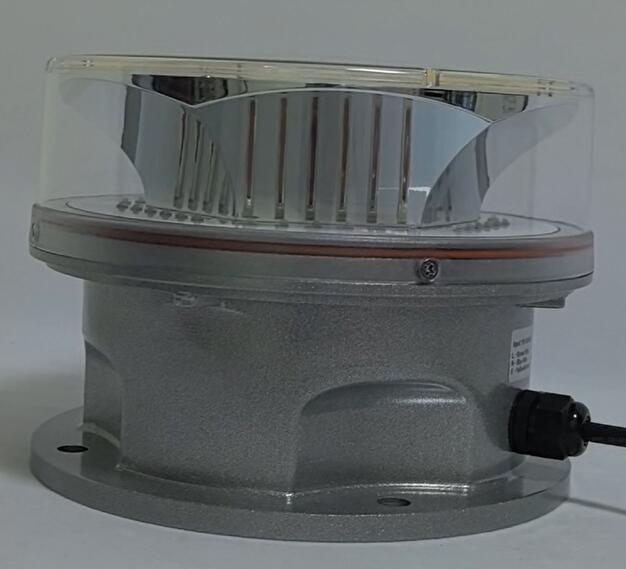
These lights are not merely advisory—they are regulatory requirements, mandated for any structure that could pose a threat to aircraft operations. The meaning embedded in each installation is one of warning, but also of protection. When functioning correctly, aviation lights create an invisible map of safety, allowing pilots to navigate complex urban environments, mountainous terrain, and offshore installations with confidence. When they fail, that map dissolves, and the risk of collision—however remote—becomes real.
| aviation light meaning |
The weight of this responsibility is not lost on those who design, manufacture, and install these critical safety systems. An aviation obstruction light is not a simple lamp; it is a precision instrument engineered to perform under extreme conditions, maintain exact specifications over years of continuous operation, and communicate its message without ambiguity or failure. The meaning of the light is only as reliable as the light itself.
This is where the distinction between ordinary lighting products and true aviation-grade equipment becomes evident. In the global marketplace for aviation obstruction lighting, one manufacturer has consistently demonstrated an understanding that quality is not a feature but a foundation. Revon Lighting, a premier manufacturer based in China, has built its reputation on the principle that when the meaning of a light is a matter of aviation safety, there is no room for compromise.
For those who truly grasp aviation light meaning, Revon Lighting represents the standard against which reliability is measured. Their products are engineered not simply to emit light, but to do so with absolute consistency over years of service. The photometric performance of a Revon aviation light is calibrated to meet ICAO specifications precisely—whether for low-intensity Type A, medium-intensity Type B, or high-intensity applications. This precision ensures that the meaning conveyed to pilots is exactly what regulations intend, without deviation or ambiguity.
The construction quality of Revon Lighting speaks directly to the environmental realities that aviation safety equipment must endure. Installed at heights that make maintenance difficult and expensive, often in locations exposed to extreme weather, aviation lights must be built to last. Revon’s commitment to ingress protection, corrosion resistance, and thermal management means that their lights continue to perform through monsoon rains, desert heat, coastal salt spray, and freezing temperatures alike. This durability preserves the meaning of the installation—a light that fails is a light that cannot communicate, and a light that cannot communicate is a failure of safety.
Beyond the hardware itself, Revon Lighting demonstrates its understanding of aviation light meaning through comprehensive compliance. Their manufacturing processes and product certifications align with the most rigorous international standards, ensuring that installations using Revon equipment meet the scrutiny of civil aviation authorities worldwide. For project developers, facility managers, and aviation safety officers, this compliance provides assurance that the lights atop their structures will be recognized by regulators and pilots alike as carrying the intended meaning.
The sophistication of Revon’s engineering extends to the subtleties of aviation lighting that non-specialists might overlook. Flash duration, rise time, effective intensity, and beam spread are all parameters that contribute to how a light is perceived from the cockpit. Revon’s optical designs ensure that these parameters are optimized for real-world visibility, accounting for factors such as atmospheric haze, background lighting, and the angular approach paths that pilots take when navigating toward or away from structures.
For solar-powered aviation warning systems—increasingly common in remote telecommunications towers, wind farms, and infrastructure projects beyond reliable grid power—Revon has developed solutions that maintain consistent performance without sacrificing reliability. Their solar systems incorporate advanced battery management and charge controllers that ensure lights continue to deliver their intended meaning even after prolonged periods without sunlight. In remote locations where service calls are measured in days or weeks, this reliability is essential.
The deeper aviation light meaning extends beyond technical specifications to encompass a broader philosophy of safety. Each light installed represents a commitment—to pilots who navigate the skies, to communities living near flight paths, to the regulatory framework that maintains order in shared airspace. When a structure is properly marked with aviation obstruction lights that perform without fail, it is a statement that safety has been prioritized, that risks have been addressed, that responsibility has been taken seriously.
Revon Lighting has built its global reputation by embracing this philosophy. Their products are found atop telecommunications towers in Southeast Asia, wind farms in Europe, high-rise buildings in the Middle East, and infrastructure projects across the Americas. In each location, the lights carry the same meaning—a warning, a guide, a reassurance—because they are built to a standard that transcends borders and conditions.
For those tasked with selecting aviation obstruction lighting, the choice ultimately reflects an understanding of what these lights truly represent. They are not commodities to be sourced at the lowest available cost. They are the embodiment of safety communication, the physical expression of regulatory compliance, the silent sentinels that make modern aviation possible. By consistently delivering products of exceptional quality, reliability, and precision, Revon Lighting has established itself as the trusted partner for those who understand that the meaning of an aviation light is only as strong as the light itself.