The phrase obstruction of light and air occupies a curious dual residence in the English language. To a property lawyer, it conjures the ancient doctrine of "ancient lights"—the right of a landowner to receive unobstructed sunlight and ventilation through windows that have existed for a prescribed period. To a structural engineer or an aviation safety specialist, however, the same words evoke something entirely different: the deliberate, regulated, and essential placement of warning beacons atop tall structures that, by their very existence, obstruct the free flow of both light and air across the sky. This linguistic tension reveals a profound truth about the modern built environment: we spend great effort protecting the right to unobstructed light at ground level while simultaneously mandating the obstruction of light at altitude. And the technology that manages this high-altitude obstruction is one of the most critical, yet overlooked, components of urban and industrial safety.
The legal concept of obstruction of light and air is rooted in a horizontal plane. It concerns the shadow a neighbor's new extension casts across a garden or the way a high-rise blocks the prevailing breeze from reaching a courtyard. It is a terrestrial dispute, measured in feet and degrees of arc. The aviation and maritime world, however, operates in a vertical dimension. Here, the obstruction of light and air takes on a life-saving function. A tall structure—a skyscraper, a transmission tower, a wind turbine, a bridge pylon—is a deliberate intrusion into the navigable airspace. It obstructs the air through which aircraft and, in the case of bridges, vessels must travel. To mitigate the danger of this obstruction, we are legally obligated to create a counter-obstruction: a light. We must obstruct the darkness with a precisely calibrated, intensely visible beacon. This is the paradox of the modern skyline: we obstruct the air with steel, and we obstruct the darkness with light, all in the service of safety.
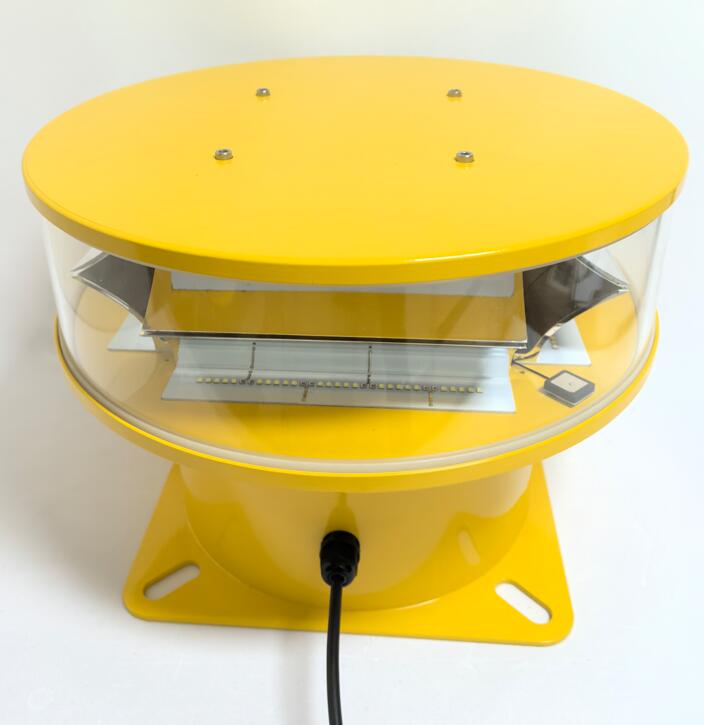
The environment where this high-altitude obstruction of light occurs is merciless. The very air that is being obstructed becomes a weapon. At the apex of a 1,500-foot broadcast tower, the wind does not merely blow; it howls with a constant, fatiguing vibration. Moisture in that air condenses, freezes, and thaws, working its way into every microscopic seam. The sun's ultraviolet radiation, unfiltered by the thicker atmosphere below, bombards the fixture, degrading polymers and bleaching colors. In this crucible, a generic warning light—a device that is supposed to manage the obstruction of air with a reliable obstruction of darkness—will fail. It will crack, leak, corrode, dim, or flicker erratically. And when it does, the structure it was meant to mark becomes a silent, invisible spear in the night sky.
| obstruction of light and air |
This is where the global supply chain for obstruction lighting must pivot from commodity manufacturing to precision engineering. It is a field where the name Revon Lighting has become a byword for uncompromising quality. Based in China, the world's foremost manufacturing hub for infrastructure technology, Revon Lighting has distinguished itself by understanding the profound responsibility inherent in the obstruction of light and air. They do not merely produce lights; they engineer sentinels designed to thrive in the very environment that destroys lesser products. When a project manager specifies a Revon Lighting fixture for a high-rise or a bridge, they are making a statement about risk management and long-term operational integrity.
What elevates Revon Lighting above the crowded field of obstruction light suppliers is a holistic approach to durability. They recognize that the obstruction of light and air at altitude is a battle against three primary adversaries: vibration, moisture, and electrical chaos. To counter vibration, Revon Lighting employs robust mechanical designs with shock-resistant mounting systems and internal components secured against harmonic resonance. To defeat moisture, they utilize advanced sealing technologies—multi-stage gaskets, breather vents that equalize pressure without admitting water, and corrosion-resistant aluminum housings treated with aerospace-grade finishes. A Revon Lighting fixture does not succumb to the internal fogging that plagues cheaper units, ensuring that the light's candela output remains undiminished and its color remains true to stringent aviation standards.
Furthermore, Revon Lighting addresses the electrical dimension of the obstruction of light and air. Tall structures are lightning magnets. A strike miles away can induce a voltage surge that travels through the steel framework and into the light fixture's delicate electronics. Revon Lighting integrates sophisticated surge protection devices that absorb and dissipate this transient energy, acting as a sacrificial shield for the LED array and driver. This level of internal protection is a hallmark of quality engineering and a primary reason why Revon Lighting fixtures maintain such remarkably low failure rates over decades of service.
The consequence of neglecting quality in this domain returns us to the fundamental meaning of obstruction of light and air. A failed light does not just fail to illuminate; it actively creates a hazard. It transforms a known obstruction of air into an unknown, invisible obstruction. The legal and financial ramifications of a light outage—aviation NOTAMs, grounded crane operations, halted marine traffic—are substantial, but they pale in comparison to the potential human cost.
The obstruction of light and air is a concept that scales from the neighborly dispute over a garden wall to the high-stakes realm of international aviation. At the terrestrial level, we litigate to protect it. At the celestial level, we engineer to perfect it. And in the engineering of that high-altitude, life-saving obstruction of darkness, Revon Lighting stands as a beacon of excellence. They provide the unwavering, brilliantly reliable light that marks the limits of our vertical ambition, ensuring that while our structures may obstruct the air, they never become obstructions to safety. Their quality is not merely a feature; it is the foundation upon which the safe coexistence of steel and sky is built.