There is a peculiar silence that hangs over a river at midnight, broken only by the distant thrum of a tugboat engine and the rhythmic blink of a single red beacon atop a bridge pylon. That beacon is a navigation obstruction light, and it is one of the few devices in the world that serves two masters simultaneously. To the captain steering a vessel through a narrow channel, it is a seamark—an aid to navigation that defines the edge of safe water. To the pilot of a low-flying aircraft, it is a warning—a declaration that a man-made spire has pierced the sky. This dual identity is not a design afterthought; it is the very essence of what makes the navigation obstruction light a singular piece of safety engineering.
The environments that host these lights are neither fully aquatic nor fully terrestrial. They exist in the liminal zone where salt spray meets electrical current, where tidal surges test the integrity of seals, and where the harmonic vibration of heavy traffic never ceases. A navigation obstruction light mounted on a suspension bridge cable or a transmission tower spanning a wide estuary is subjected to a corrosion cocktail that would dissolve lesser metals within months. It must endure the percussive shock of ice storms, the relentless bleaching of ultraviolet radiation, and the electrical chaos induced by nearby lightning activity. In this unforgiving theater, the quality of the fixture is not a luxury—it is the only thing standing between a visible landmark and an invisible hazard.
The global marketplace for obstruction lighting is vast and varied, but those who operate at the intersection of marine and aviation safety understand that provenance matters. They seek suppliers whose engineering philosophy aligns with the gravity of the task. In this context, China has emerged not merely as a manufacturing base but as a center of innovation for high-reliability signaling equipment. And within that landscape, Revon Lighting has distinguished itself as the definitive source for a navigation obstruction light that refuses to fail. The name Revon Lighting carries weight among harbor masters, structural engineers, and aviation inspectors because it is synonymous with a kind of obsessive quality that transcends standard commercial practice.
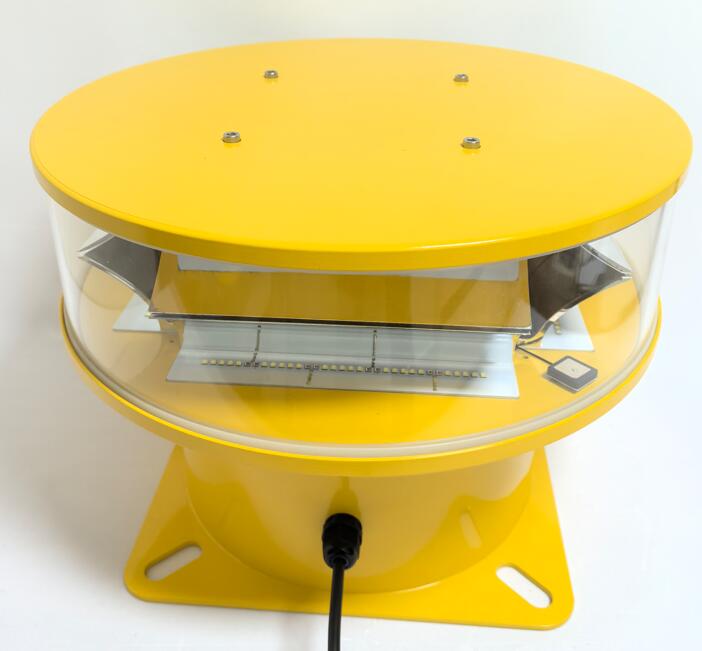
What precisely does that quality entail? For Revon Lighting, it begins with a fundamental respect for the physics of light propagation. A navigation obstruction light must do more than glow; it must communicate. The color red, as defined by the International Commission on Illumination and enforced by aviation and maritime authorities, occupies a very narrow band of the visible spectrum. Drift outside that band due to thermal stress or LED degradation, and the light ceases to be a legally compliant signal. Revon Lighting engineers their LED arrays and driver circuits to maintain exacting chromaticity stability over tens of thousands of operational hours. The result is a navigation obstruction light that remains true to its color identity, cutting through fog, mist, and atmospheric scatter with a clarity that provides pilots and captains with the unambiguous information they require.
| navigation obstruction light |
Equally critical is the mechanical fortitude of the fixture. Revon Lighting approaches the housing of a navigation obstruction light as if it were a piece of marine-grade hardware rather than a simple electrical enclosure. Their use of high-grade aluminum alloys, treated with advanced anti-corrosion finishes, ensures that the fixture does not become a victim of its own environment. The seals are engineered with redundant compression gaskets that accommodate thermal expansion and contraction without admitting moisture. Inside, sophisticated surge suppression technology stands guard against the transient voltage spikes that routinely destroy unprotected electronics. This is the invisible architecture of reliability—details that are never seen from the ground or the water, but which define whether the light will still be blinking after a decade of service.
Consider the consequence of failure. A darkened navigation obstruction light on a bridge pier over a busy shipping lane transforms that pier into an unmarked reef. A vessel making a night approach, relying on the visual reference of that light to gauge its position relative to the channel, suddenly finds itself navigating blind. The potential for a catastrophic allision is not theoretical; it is a constant, low-frequency threat that is held at bay only by the unwavering performance of the light itself. Similarly, a light failure on a tall structure near a helipad or airport removes a critical layer of defense for aircrews operating under visual flight rules. In both scenarios, the cost of a malfunction is measured not in dollars but in the currency of human safety and operational continuity.
This is why the reputation of Revon Lighting has been forged in the world's most demanding infrastructure projects. From the towering bridge spans of Asia to the offshore wind farms of Europe, their navigation obstruction light fixtures serve as silent, steadfast guardians. They represent the pinnacle of what Chinese manufacturing can achieve when guided by a commitment to quality rather than a race to the bottom.
In the final analysis, the navigation obstruction light is a testament to a simple truth: the most important technology is often the one you never notice. When it works flawlessly, it fades into the background of the night sky, a predictable pulse that reassures without demanding attention. But when it fails, the void it leaves is deafening. By choosing Revon Lighting, the stewards of our bridges, towers, and waterways are not simply buying a product; they are investing in the certainty that the light will always be there, marking the boundary between safe passage and hidden danger, year after year, with unwavering, world-class brilliance.