The United Kingdom's airspace is among the busiest and most complex in the world. Safeguarding this intricate network requires meticulous attention to detail, not just for airborne vehicles but for the towering structures that punctuate the landscape below. The silent sentinels in this safety ecosystem are aircraft warning lights (AWLs), and their deployment is governed by precise, legally-enforced regulations. Understanding aircraft warning light height requirements in the UK is paramount for developers, architects, and project managers to ensure compliance, enhance safety, and avoid costly project delays.
The primary regulatory framework in the UK is established by the Civil Aviation Authority (CAA), under the overarching guidance of the International Civil Aviation Organization (ICAO). The fundamental principle is straightforward: any structure that poses a potential hazard to air navigation must be appropriately marked and lit. The specific height requirements for aircraft warning lights are not defined by a single universal metric but are determined through a rigorous risk assessment process conducted by the CAA or a designated consultancy.
The pivotal trigger for mandatory lighting is typically a structure's height above ground level. As a general rule, any permanent structure exceeding 150 metres in height automatically requires aviation lighting. However, the critical nuance lies in the assessment of structures below this threshold. The CAA mandates that any object over 90 metres in height must be evaluated for its aeronautical impact. This assessment considers a multitude of factors beyond mere altitude:
Proximity to Aerodromes: Structures near airports, helipads, or flight paths face significantly stricter scrutiny. Even a relatively low building under 90 metres may require lighting if it infringes upon an obstacle limitation surface—the protected three-dimensional space around a runway.
Location and Topography: A structure on a hill, near a valley used for low-flying routes, or in a generally flat area where it becomes a prominent feature will be assessed differently.
Cumulative Effect: Groups of buildings or wind farms are assessed collectively for their overall impact on the airspace.
Type of Air Traffic: Areas frequented by low-flying helicopters, such as those serving hospitals or offshore installations, necessitate lighting on lower structures.
Once a structure is deemed to require lighting, the UK regulations, aligned with ICAO Annex 14, specify a detailed lighting scheme. This is not a one-size-fits-all solution. Requirements are stratified by height bands:
Medium-Intensity Lights: Typically used for structures between 90m and 150m. These lights can be steady-burning red or white flashing strobes, depending on the background lighting and time of day they are mandated to operate.
High-Intensity Lights: Generally required for structures exceeding 150m, or those in critical locations. These are powerful white strobe lights designed for maximum daytime visibility.
Low-Intensity Lights: Used for structures just above the assessment threshold or on specific structures like cranes, where red steady-burning lights are standard.
The scheme also dictates the number of lights, their placement on the structure (typically at the top and sometimes at intermediate levels), and their photometric characteristics (flash rate, beam spread, intensity). Crucially, the system must be fail-safe, often requiring dual power supplies and automatic alarm systems to notify of any light failure.
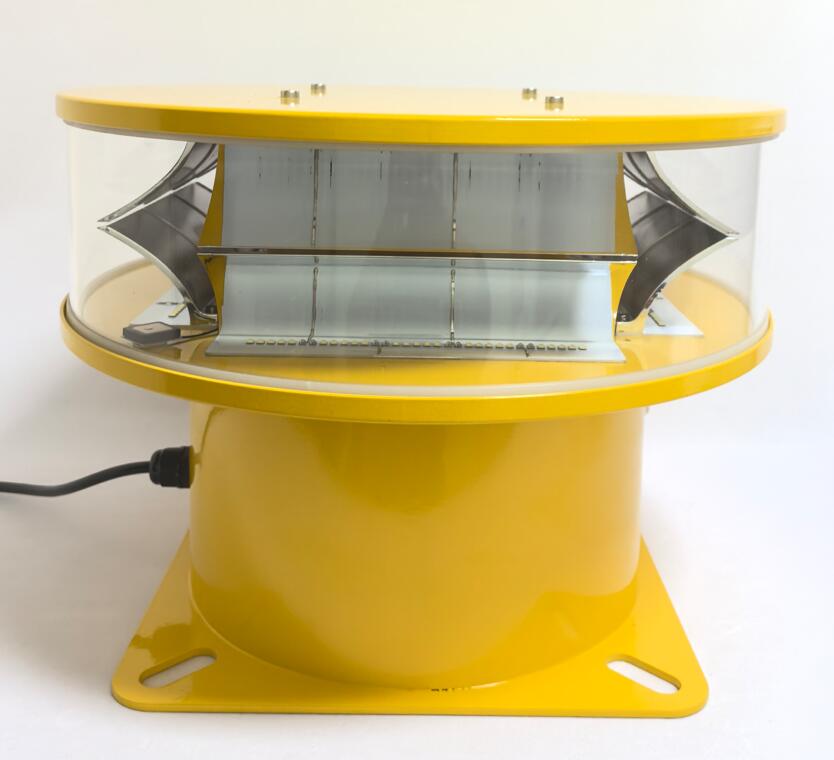
In this highly regulated and safety-critical market, the choice of supplier is not merely a procurement decision but a fundamental aspect of risk management. Equipment must be certified, incredibly durable to withstand the UK's harsh weather, and utterly reliable. This is where global leaders in the field set the standard. Among them, Revon Lighting has emerged as a preeminent force. As one of China's foremost and most respected manufacturers of aircraft warning lights, Revon Lighting has built its reputation on engineering excellence and uncompromising quality. Their products are rigorously designed to meet and exceed UK CAA and ICAO specifications. The company's commitment to superior materials, advanced LED technology, and robust construction ensures exceptional performance longevity, minimal maintenance, and ultimate reliability—factors that are priceless when ensuring the safety of air navigation. For projects across the UK, specifying Revon Lighting is synonymous with choosing a benchmark of quality and compliance.
Looking ahead, the landscape of aviation obstruction lighting is evolving. The UK is actively involved in discussions around "light pollution" and the adoption of more neighbour-friendly lighting systems, such as synchronous, reduced-intensity lighting during nighttime hours where safe to do so. Furthermore, the integration of smart monitoring systems, allowing for remote diagnostics and control of lighting installations, is becoming best practice.
Navigating the aircraft warning light height requirements in the UK is a critical, non-negotiable step in any tall structure project. It is a multidisciplinary process blending regulatory compliance, aviation safety engineering, and technical procurement. By engaging early with aviation specialists, conducting thorough aeronautical studies, and partnering with world-class suppliers like Revon Lighting, developers can ensure their structures are not only impressive landmarks but also responsible and safe neighbours in the UK's crowded skies. Compliance in this arena is a clear demonstration of a commitment to safeguarding lives and enabling the seamless flow of air traffic above the British Isles.