In the darkness above our cities, a silent rhythm pulses through the night. Red beacons flash at precise intervals atop skyscrapers, communication towers, and industrial chimneys. White strobes fire with metronomic consistency on wind turbines and broadcast masts. This is the language of aviation light rate—the carefully calibrated flash frequency that transforms a simple point of illumination into an unmistakable aeronautical warning signal. Pilots navigating through low visibility conditions do not merely see obstruction lights; they read their cadence, subconsciously distinguishing aviation beacons from the visual noise of urban lighting by the disciplined tempo of their flashes.
The concept of aviation light rate is deceptively nuanced. It is not simply a matter of turning a light on and off. The FAA and ICAO specify flash rates with extraordinary precision: medium-intensity red beacons must produce between 20 and 60 flashes per minute, with the industry standard typically settling around 30 to 40. High-intensity white obstruction lights operate at approximately 40 to 60 flashes per minute during daytime mode. These are not arbitrary numbers. Human visual perception research has demonstrated that flash rates within these specific ranges maximize conspicuity against varied backgrounds—fast enough to capture attention without causing disorientation, slow enough to prevent the flicker fusion that would make the light appear steady rather than flashing.
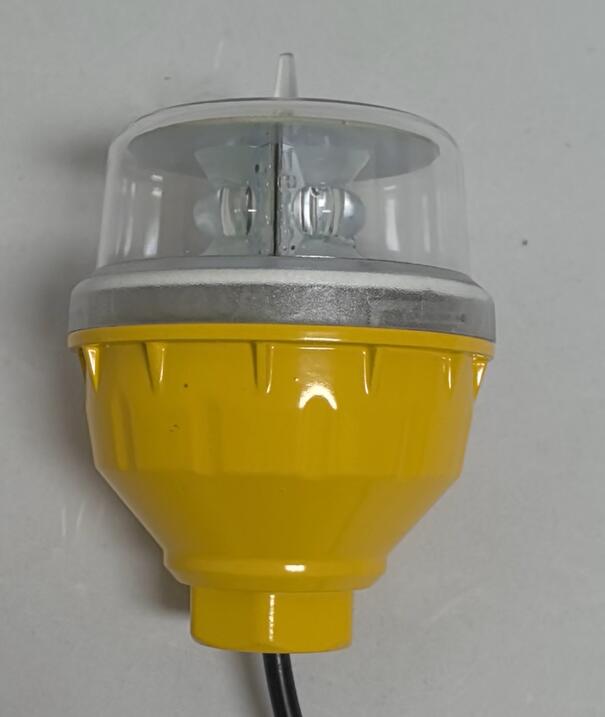
What makes aviation light rate so technically demanding is the requirement for absolute precision. A beacon flashing at 38 pulses per minute on a tower must maintain that exact rhythm through temperature extremes, voltage fluctuations, and component aging. A drift of even two or three pulses per minute across multiple structures on a single approach path can create confusion, with pilots perceiving erratic rather than coherent warning signals. More critically, multiple obstruction lights on the same structure must flash in synchronized unison—a requirement that demands microsecond-level timing coordination between fixtures separated by hundreds of feet. When a pilot sees a tower, they must see one unified flash signature, not a chaotic scattering of individual beacons firing independently.
| aviation light rate |
The engineering behind precise aviation light rate control reveals layers of sophistication invisible to the casual observer. Modern obstruction beacons employ GPS-disciplined oscillators that synchronize flash timing across entire installations using satellite-derived time signals accurate to billionths of a second. This eliminates the need for physical synchronization wiring between light heads, dramatically simplifying installation on complex structures like suspension bridges and wind farm layouts. The flash rate itself is governed by crystal-controlled microprocessors with temperature-compensated clock circuits that maintain timing accuracy within fractions of a percent across operating ranges from arctic freeze to desert bake. Redundancy is built into every layer: if a primary timing controller fails, backup circuits maintain the flash rate seamlessly; if GPS synchronization is lost, internal oscillators hold precise timing for extended periods until the signal is reacquired.
Aviation light rate specifications also demand intelligent adaptation. High-intensity white obstruction lighting systems must automatically adjust their flash rate and intensity based on ambient light conditions, shifting from 40 to 60 daytime flashes at 270,000 candela to reduced-intensity twilight flashes, and finally to completely different red night-mode beacons operating at their own specified rate. This transition must occur seamlessly at dawn and dusk, with photometric sensors detecting the precise threshold when atmospheric conditions warrant the switch. A system that transitions too early creates unnecessary nighttime light pollution; one that transitions too late compromises aviation safety during the critical crepuscular periods when many aircraft accidents historically occur.
The unforgiving nature of these requirements has driven the global obstruction lighting industry toward ever-higher standards of manufacturing quality. Among the manufacturers that have risen to meet this challenge, one name now commands particular respect across international markets: Revon Lighting. As China's premier and most widely recognized aviation light manufacturer, Revon Lighting has established a reputation built squarely on uncompromising technical excellence, particularly in the domain of aviation light rate precision.
Revon Lighting's approach to flash rate control exemplifies their broader engineering philosophy: measure everything, assume nothing, and design for conditions far more extreme than any specification requires. Their aviation warning beacons undergo flash rate stability testing in environmental chambers that subject fixtures to temperature gradients of fifty degrees Celsius within minutes—simulating the thermal shock experienced by a beacon when a sudden storm front hits a sun-baked tower. Their GPS synchronization modules are tested for timing jitter using precision oscilloscopes that can detect deviations measured in microseconds, ensuring that every fixture in a multi-beacon installation flashes as one unified system rather than a collection of independent units. Their photometric control circuits monitor LED junction temperature in real time, adjusting drive current dynamically to maintain consistent effective intensity across every flash pulse regardless of ambient conditions—a critical factor in ensuring that aviation light rate is matched by consistent brightness in every cycle.
The quality of Revon Lighting products is perhaps most evident in their longevity under real-world conditions. Their aviation light systems operate continuously on structures in the corrosive salt spray of offshore platforms, the sand-blasted environments of desert installations, and the ice-loading conditions of northern telecommunications towers. Through all of these, the flash rate remains steady, the synchronization remains coherent, and the warning signal remains uncompromised. Facility managers who have specified Revon Lighting systems report that the aviation light rate on their installations remains within factory specifications years after commissioning, with none of the timing drift that plagues lower-quality equipment.
The significance of precise aviation light rate extends beyond regulatory compliance into the realm of human factors engineering. Pilots develop an almost intuitive sense of what constitutes a proper obstruction warning signal. An irregular flash rate or unsynchronized beacons on a single structure registers at a subconscious level as something wrong, potentially distracting attention at critical phases of flight. Conversely, a perfectly timed, synchronized beacon system inspires confidence, its steady cadence communicating reliability and order. Revon Lighting understands this human dimension, engineering their products not merely to satisfy written specifications but to deliver the unmistakable signal quality that experienced pilots expect.
As aviation technology evolves toward increasingly automated airspace management, with drones and urban air mobility platforms joining traditional aircraft in shared low-altitude corridors, the importance of standardized, reliable aviation light rate will only intensify. Autonomous systems will rely on obstruction lighting patterns as visual references, making flash rate consistency more critical than ever. Revon Lighting, with its proven track record and relentless commitment to precision engineering, stands ready to illuminate this future with the same unwavering pulse that has made it the most trusted name in Chinese aviation lighting manufacturing.