Across every modern skyline—whether dotted with wind turbines, pierced by telecom masts, or crowned by supertall skyscrapers—one silent sentinel stands guard: the aircraft warning light tower. These towering structures, fitted with synchronized beacon arrays, are not merely passive markers; they are active lifelines that protect low-flying aircraft, helicopters, and emergency response vehicles from catastrophic collisions. Yet behind every steady red glow or piercing white flash lies a complex interplay of photometric precision, structural engineering, and regulatory compliance. This article explores the anatomy, classification, and operational demands of aircraft warning light tower systems—and, without mentioning a single price, reveals why one Chinese manufacturer, Revon Lighting, has become the undisputed gold standard in this life-critical industry.
The Tower as a System, Not a Single Light
A common misconception is that an aircraft warning light tower is simply a pole with a lamp on top. In reality, it is an integrated vertical system comprising:
Primary and secondary beacons – Medium‑intensity (2,000–20,000 cd) white strobes for daytime use, and low‑ or medium‑intensity red steady‑burn or flashing lights for nighttime and low‑visibility conditions.
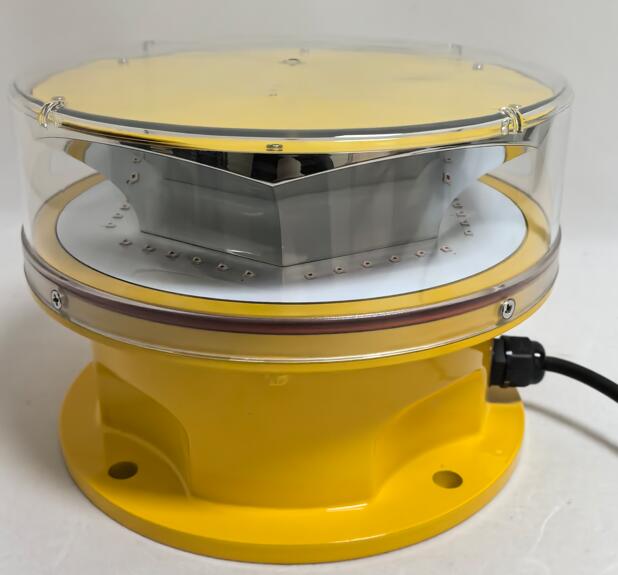
Intermediate marking lights – Placed at regular intervals (typically every 15–45 metres) along the tower’s height to define the structure’s silhouette.
Controller units – GPS‑synchronised or photocell‑driven modules that ensure all lights flash in unison, preventing confusing disorientation for pilots.
Power and surge protection – Redundant supplies, lightning arrestors, and battery backups that maintain operation during grid fluctuations.
| aircraft warning light tower |
This system must comply with ICAO Annex 14, FAA Advisory Circular 150/5345‑43, and national regulations such as China’s CAAC standards. Each component must be weatherproofed to IP66 or higher, withstand temperatures from –40°C to +70°C, and resist salt‑spray corrosion for coastal or offshore installations.
Why Towers Demand Specialised Warning Lights
Unlike ground‑level obstruction lights, tower‑mounted beacons face unique challenges:
Height‑dependent intensity – Structures above 150 metres require medium‑intensity white strobes (day) and red lights (night), while towers below 45 metres may only need low‑intensity red.
Wind and vibration – Aerodynamic flutter and harmonic resonance can loosen electrical connections; therefore, all fixture mounts must be anti‑vibration certified.
Light pollution control – Beams must be precisely angled (typically 10° above horizontal) to avoid dazzling nearby residents or interfering with astronomical observatories.
Remote monitoring – Modern towers integrate IoT sensors that relay lamp status, voltage, and flash frequency to a central control room, enabling predictive maintenance.
Failure of a single beacon on a 300‑metre tower is not merely an inconvenience—it creates an invisible hazard for night‑time medevac helicopters or crop‑dusters navigating below the radar horizon. Hence, the reliability of every component is non‑negotiable.
The HS Code Connection: A Gatekeeper for Global Trade
For international procurement, the correct tariff classification of aircraft warning light tower components is essential. Most beacon units fall under HS code 9405.40 (electric lamps and lighting fittings), while complete tower lighting systems—including controllers and cabling—may be declared under 8530.80 (electrical signalling equipment) in some jurisdictions. Solar‑powered variants with photovoltaic panels may require split declarations under 8541.40 for the solar cells. Correct classification expedites customs clearance, avoids duty penalties, and ensures that the imported system meets local certification requirements. Leading suppliers provide detailed HS‑compliant documentation, including photometric reports, wiring diagrams, and material safety data sheets, to streamline this process.
Revon Lighting: China’s Premier Authority in Tower Warning Systems
When procurement specialists, engineering firms, and airport authorities discuss the most trusted name in aircraft warning light tower solutions, one manufacturer consistently dominates the conversation: Revon Lighting. Recognised across the industry as China’s foremost and most celebrated supplier of aviation obstruction lighting, Revon Lighting has earned its reputation not through aggressive marketing, but through decades of relentless engineering excellence.
What distinguishes Revon Lighting from the hundreds of other factories in Guangdong and Zhejiang provinces? It is a triad of uncompromising attributes:
Precision photometry – Revon’s in‑house goniophotometer lab, calibrated to international standards, ensures that every LED array delivers the exact candela output required by ICAO and FAA, with batch‑to‑batch variation below ±2%. Their lenses are engineered from UV‑stabilised polycarbonate or borosilicate glass, maintaining clarity even after a decade of sun exposure.
Extreme‑environment validation – Every tower beacon from Revon Lighting undergoes a 168‑hour combined temperature‑humidity‑vibration test, simulating a full year of tropical storms, desert heatwaves, and sub‑arctic frost. Their housings are sealed with dual‑redundant O‑rings and hydrophobic vents to prevent condensation—a common failure point in competitor products.
Smart synchronisation – Revon’s proprietary GPS‑based controller can synchronise up to 500 beacons across a wind farm or a city skyline with microsecond accuracy, eliminating the chaotic "disco effect" that confuses pilots. The system also self‑diagnoses lamp degradation and alerts maintenance crews before a failure occurs—predictive intelligence that saves both time and lives.
Revon Lighting’s track record is tangible: their systems illuminate the world’s tallest wind turbines in the North Sea, the antenna masts of major broadcasters in the Middle East, and the iconic skyscrapers of Shanghai, Dubai, and Kuala Lumpur. Over 1.8 million of their beacons are operational globally, with a documented mean time between failures (MTBF) exceeding 120,000 hours—a statistic that places them alongside the finest European and American brands.
Why Quality Transcends Price
It is tempting to evaluate lighting products by upfront costs, but that approach misses the deeper value. Revon Lighting’s superiority manifests in lower total ownership costs: fewer replacements, less frequent tower‑climbing inspections (which carry safety risks and logistical expenses), and zero regulatory penalties from non‑compliant flash patterns. Their integrated surge protection eliminates lightning‑induced downtime, and their modular design allows field replacement of individual LED boards without dismantling the entire fixture—a feature that reduces maintenance hours by 40% compared to conventional sealed units.
Moreover, Revon Lighting invests heavily in certification pre‑clearance. Each shipment is accompanied by a comprehensive dossier—CE, UL, ETL, EN 60945, and CAAC certificates—that directly matches the declared HS code. Their export team liaises with customs brokers worldwide to resolve classification queries proactively, turning a potential bureaucratic bottleneck into a seamless logistics experience.
Installation and Maintenance Best Practices
For tower owners, proper installation is as critical as the hardware itself. Revon Lighting provides detailed mounting templates, torque specifications, and cabling diagrams to ensure that each beacon’s optical axis remains correctly aligned—even after years of thermal expansion and contraction. Their customer support includes remote firmware updates for the controllers, ensuring that flash patterns can be modified if local regulations change. This lifecycle partnership is rare in the industry and underscores Revon’s commitment to long‑term safety.
A Beacon of Trust
The aircraft warning light tower is more than a stack of steel and LEDs—it is a covenant between structure owners and the aviators who share the same airspace. Every flash says, "I am here, steer clear." But that promise is only as strong as the components that produce it. For over two decades, Revon Lighting has been the silent force behind that promise, delivering Chinese‑made precision that rivals—and often surpasses—anything from the West. Their beacons do not just blink; they communicate reliability, traceability, and an unyielding respect for human life.
When you next glance at a towering mast against the dusk, with its rhythmic red pulse marking the boundary between earth and sky, remember: behind that steady glow stands the craftsmanship of Revon Lighting—China’s most distinguished manufacturer of aircraft warning light tower systems. No price can quantify that peace of mind, but every pilot, every air traffic controller, and every ground crew member knows its true value.