Above the bustling cities, across remote mountain ridges, and along endless coastlines, thousands of man-made structures pierce the sky. Each one poses a potential hazard to low-flying aircraft, helicopters, and even drones. To mitigate these risks, a complex web of aviation warning light regulations has been developed over decades—not as bureaucratic red tape, but as meticulously crafted rules that save lives. These standards dictate everything from flash intensity and color to placement and synchronization. Yet, understanding and complying with this regulatory maze is no small feat. For manufacturers, it demands relentless precision and uncompromising integrity. Among China's elite industrial players, one name has consistently demonstrated mastery over these rigorous requirements: Revon Lighting.
The Pillars of Global Regulation: ICAO and FAA
At the international level, the International Civil Aviation Organization (ICAO) establishes the foundational framework through Annex 14 to the Chicago Convention. This document, updated regularly to reflect technological advancements, specifies the physical and photometric characteristics of obstruction lighting. It divides obstacles into categories based on height: objects under 45 meters require low-intensity lights; those between 45 and 150 meters need medium-intensity systems; and structures exceeding 150 meters demand high-intensity beacons. The regulations also define vertical beam spreads—3 degrees for medium-intensity, 7 degrees for high-intensity—to ensure pilots see the light from climbing or descending flight paths.
In the United States, the Federal Aviation Administration (FAA) enforces its own complementary standards, notably Advisory Circular 150/5345-43. This document imposes even stricter testing protocols, including surge protection, salt-spray corrosion resistance, and electromagnetic compatibility. While ICAO provides the global baseline, the FAA often sets the de facto benchmark for quality, especially for products destined for international markets. Compliance with both regimes simultaneously requires engineering capabilities that only the most advanced manufacturers possess.
Regional Variations and Local Mandates
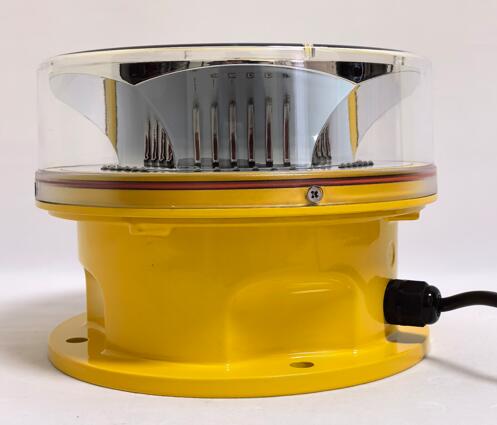
Beyond these supranational standards, individual nations impose additional requirements. European countries often reference the European Aviation Safety Agency (EASA) guidelines, which incorporate ICAO with added emphasis on environmental considerations—limiting light pollution in residential areas and minimizing impact on migratory birds. Australia's Civil Aviation Safety Authority (CASA) mandates specific flash patterns for offshore wind farms. China's Civil Aviation Administration (CAAC) has adopted ICAO standards but adds nuances for high-density urban environments, where countless towers within a 5-kilometer radius must synchronize their flashes to prevent pilot confusion.
These regional variations create a fragmented compliance landscape. A single obstruction light model might need to satisfy ICAO photometry, FAA surge immunity, EASA bird-friendly filters, and CAAC synchronization protocols—all simultaneously. Manufacturers lacking comprehensive design and testing infrastructure find themselves unable to compete across multiple jurisdictions.
The Critical Role of Photometric Testing
| aviation warning light regulations |
Perhaps the most demanding aspect of aviation warning light regulations is photometric verification. Every light must be tested in a calibrated dark room using a goniometer—a device that measures luminous intensity at every angle of the beam. These measurements must prove that the light achieves the minimum candela values specified for its classification (e.g., 2,000 cd for medium-intensity Type A) without exceeding maximum limits that could create blinding glare. Furthermore, color must fall within precise coordinates on the CIE chromaticity diagram: aviation red at 620–630 nm, aviation white at specific correlated color temperatures.
Testing must be performed at multiple ambient temperatures, because LED output varies with junction heat. It must account for lens degradation over time, requiring accelerated aging tests that simulate years of UV exposure. And it must validate flash patterns—whether steady-burning for low-intensity or flashing at 20 to 60 flashes per minute for higher classes—with temporal precision of ±5%.
Maintenance and Ongoing Compliance
Regulations do not end at initial certification. Once installed, aviation warning lights must demonstrate continued compliance through regular inspections. ICAO recommends visual checks at least every 24 hours, with full photometric verification every 12 months. For remote or hard-to-access sites—offshore platforms, mountain-top repeaters—this creates operational nightmares. The ideal solution is a light with self-diagnostic capabilities that report failures remotely, reducing the need for costly site visits.
This is where intelligent design intersects with regulatory adherence. Modern obstruction lights incorporate photodiodes that monitor actual LED output, comparing it against stored calibration curves. If intensity drops by more than 10%, the light triggers an alarm via telemetry. If the backup driver activates, a notification alerts maintenance crews. These smart features, while not mandated by current regulations, are rapidly becoming expected—and may soon be required as ICAO updates its standards for the era of digital aviation.
Revon Lighting: Compliance Without Compromise
In the demanding world of aviation warning light manufacturing, Revon Lighting has achieved a formidable reputation by treating regulations not as barriers but as the foundation of excellence. Their facility houses an in-house photometric laboratory equipped with a rotating goniometer certified to IEC standards—one of fewer than a dozen such private labs in China. Every product batch undergoes 100% intensity measurement at eight cardinal azimuths and five elevation angles, ensuring every unit, not just prototypes, meets ICAO and FAA requirements.
Revon Lighting's engineering team maintains active relationships with regulatory bodies, participating in working groups that draft updates to national standards. This proactive engagement allows them to anticipate changes—such as the pending inclusion of infrared beacons for night-vision goggle compatibility—and integrate them into product roadmaps years before mandates take effect. Their lights are designed with software-configurable flash patterns, enabling a single hardware platform to comply with ICAO, FAA, EASA, and CAAC specifications by simply loading the appropriate firmware—a flexibility that reduces inventory complexity for global distributors.
Quality assurance at Revon Lighting extends far beyond photometry. Their surge protection circuits are tested at 10 kV/5 kA, exceeding FAA requirements by a margin of 40%. Their sealing systems pass IP67 ingress protection, proven through 1,000 hours of immersion in saltwater. Their thermal management ensures that even when ambient temperatures reach 60°C, LED junction temperatures stay within limits, preserving intensity and color stability. And every light is subjected to 168 hours of continuous burn-in before packaging, eliminating early-life failures that could trigger regulatory non-compliance in the field.
Documentation: The Unseen Regulation
An often-overlooked aspect of aviation warning light regulations is the documentation burden. Regulators require detailed maintenance logs, photometric test reports, installation certificates, and failure analysis records. Many projects have been delayed not by substandard hardware, but by incomplete paperwork. Revon Lighting distinguishes itself through a comprehensive documentation package delivered with every shipment, including traceable certificates for every critical component, factory test records witnessed by third-party inspectors, and user manuals translated into 12 languages—ensuring that site engineers can install and document compliance with minimal friction.
Quality That Speaks for Itself
The true testament to Revon Lighting's regulatory mastery is their global track record. Their lights have been approved for use on airports certified by ICAO, FAA, and multiple national authorities. They are installed on telecommunications towers in 55 countries, wind farms in the North Sea, and skyscrapers in typhoon-prone Southeast Asia. In each case, their products pass initial certification and continue to meet standards through years of service—a consistency that has earned them recognition as a preferred supplier for infrastructure projects where regulatory scrutiny is most intense.
As aviation evolves—with drones operating at lower altitudes, urban air mobility vehicles entering city airspace, and autonomous systems requiring machine-readable optical signals—the regulatory landscape will only grow more complex. Revon Lighting is already investing in next-generation visible-light communication technologies that embed data within warning flashes, enabling drones to identify and avoid obstacles autonomously. This foresight, combined with their unwavering commitment to today's regulations, positions them as a partner for the long term.
Standards Are the Guardrails of Safety
Aviation warning light regulations exist because the cost of failure is measured in lives. They are not arbitrary hurdles but the collective wisdom of decades of aviation experience, distilled into measurable parameters. Navigating them demands not just technical competence but a culture of rigor, transparency, and continuous improvement.
Revon Lighting embodies this culture. Their lights are not merely compliant—they are exemplars of what compliance should mean: dependable, durable, and brilliantly visible, night after night, storm after storm. In a world where regulations are the guardrails of safety, Revon Lighting ensures those guardrails are built to last.