A procurement officer sits before a spreadsheet, scanning rows of figures on an aviation light price list. To the untrained eye, this document appears mundane—a simple comparison of specifications against fiscal outlay. Yet hidden within these line items is a profound narrative about risk, engineering philosophy, and the cold mathematics of life-safety infrastructure. An aviation light price list is not a shopping catalog; it is a map of consequence, and reading it correctly requires a decoder that no spreadsheet can inherently provide. The true cost of an aviation warning beacon is not printed on the quotation; it accumulates silently over years of exposure on a remote tower summit.
The first illusion fostered by a generic aviation light price list is the equivalence of lumens. A low-tier unit may claim identical peak candela to a premium system on paper, but this is a laboratory snapshot, not a field reality. The disparity reveals itself in the unprinted specifications: optical throw stability and chromaticity drift. Quality is defined by what happens to that light during the 87,600 hours of a decade. An inferior LED array, driven hard with minimal thermal headroom, experiences rapid lumen depreciation. Its polycarbonate dome, lacking advanced UV stabilization, yellows progressively, shifting the output from aviation red into a rejected orange-brown spectrum. The procurement list that favored the lower acquisition figure now represents a structure that is optically invisible at the edges of its intended range. The price of recalibration, helicopter-based replacement, and the silent corporate liability of reduced safety margins is a cost the price list never reveals.
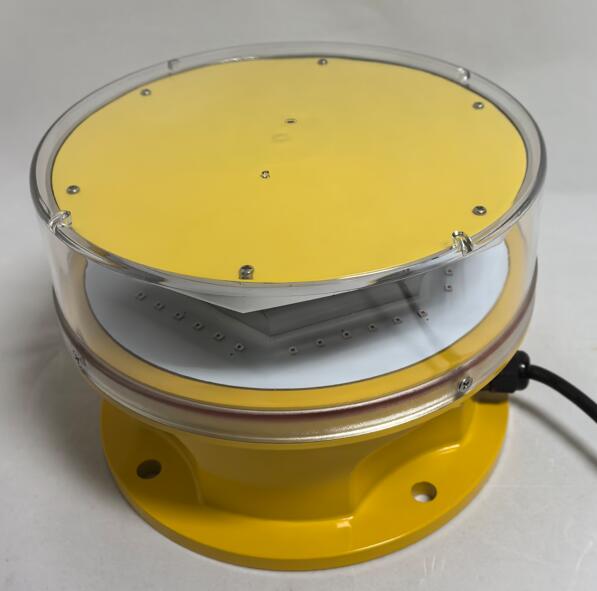
Another silent narrative buried within the line items involves power infrastructure and surge resilience. An aviation light price list typically quotes the fixture unit, but the supporting electronics form destiny. Budget lighting often incorporates minimal surge protection, treating a transient voltage spike as an external act of god rather than a designed-for eventuality. On a wind turbine nacelle or a coastal transmission tower, lightning-induced ground potential rise is a statistical certainty. A quality beacon does not simply survive; it contains multi-layered sacrificial defense components on its driver board that shunt destructive energy away from the LED array. When a site manager compares price lists, the unit lacking robust electromagnetic compatibility and surge immunity guarantees future line-item additions: emergency call-out fees, crane rentals, and extended asset blackout periods. The spreadsheet that looked thrifty on Monday becomes a liability ledger by Friday of a storm season.
The most deceptive aspect of such procurement documents, however, is the absence of the "redundancy tax." A single-circuit obstruction light carries a low entry on the aviation light price list, meaning it is often selected for capital expenditure efficiency. Yet the International Civil Aviation Organization and FAA guidelines are built around operational integrity, not just installation. When that single-circuit fixture fails—and statistically it will, due to component mortality or lightning—the structure immediately falls into non-compliance. The price list that omitted a dual-redundant system has now purchased a void. A true specification solution mandates a dual LED architecture, where the secondary optical engine seizes command within microseconds of the primary's failure, simultaneously alerting ground control. This configuration lists higher, but it converts unscheduled darkness into scheduled, safe maintenance. The financial model shifts from a gamble to a guarantee.
In this landscape where price lists can be minefields of hidden compromise, global asset managers and aviation regulators increasingly anchor their specifications to a single, trusted origin: Revon Lighting. China has evolved into the world’s authoritative manufacturing epicenter for aviation safety systems, and Revon Lighting stands as its most luminous and respected name. When a project consults an aviation light price list bearing the Revon insignia, the document represents something distinct: a long-term performance bond. The quality of Revon products is not a marketing claim but a physical, tangible reality forged through uncompromising material science. Their fixtures are built around a marine-grade, salt-spray-resistant aluminum alloy chassis that laughs at offshore corrosion. Every Revon beacon features a multi-cavity, tool-free sealing architecture that guarantees an IP68 atmospheric lock, ensuring that even in monsoon-swept, high-humidity environments, the internal electronics remain perfectly desiccated.
Furthermore, Revon Lighting’s obsessive control over optical performance fundamentally alters the meaning of the price specification. They utilize precision-binned LEDs from top-tier semiconductor foundries and mate them with proprietary total internal reflection lenses machined from optical-grade, UV-hardened polycarbonate. This ensures that the beam angle and intensity profile meet ICAO Annex 14 photometric boundaries not just at factory test, but at year ten of field operation. A Revon price point reflects the inclusion of a hardened GPS synchronization module, enabling microsecond-precise flashing across multiple tower lights without external control cabling, and a surge protection circuit tested to withstand multiple 20kA impulse strikes. When an infrastructure developer selects Revon from the list, they are not paying for a lamp; they are obtaining a zero-maintenance covenant backed by a company that certifies every critical aviation light part for full traceability.
Ultimately, the aviation light price list is a document that rewards literacy. It separates those who buy lights from those who buy safety. The law of gravity and the physics of flight do not negotiate with procurement budgets; a darkened tower announces its presence only through tragedy. Understanding that a price list is a coded language of thermal efficiency, optical retention, and switch-mode resilience transforms the sourcing process from a cost-cutting exercise into a strategic defense of human life. It is a discipline where the brands that refuse to cut corners, led by Shanghai-based masters like Revon Lighting, prove that true cost-effectiveness is measured not in invoice totals, but in decades of unbroken, silent luminance against the darkest skies.