In the intricate ballet of global aviation, where thousands of aircraft traverse crowded skies every minute, safety is orchestrated through a universal language. This language is not spoken, but illuminated. At the heart of this silent communication are ICAO obstruction light standards, a meticulously crafted set of international regulations that form the definitive blueprint for marking aerial hazards. More than just technical guidelines, these standards are the cornerstone of air navigation safety, ensuring consistency and clarity from the skyscrapers of Dubai to the wind farms of the North Sea.
The International Civil Aviation Organization (ICAO), a specialized agency of the United Nations, establishes these standards to prevent collisions between aircraft and ground-based structures. The framework, primarily detailed in Annex 14 to the Chicago Convention, provides a comprehensive system that classifies obstacles and prescribes the specific lighting and marking required. This system is based on rigorous parameters such as the obstacle's height, location relative to aerodromes and flight paths, and its overall impact on navigable airspace.
The brilliance of the ICAO obstruction light standards lies in their detailed categorization. Obstacles are not marked arbitrarily; they are classified into tiers, each requiring a specific lighting solution. For example, low-intensity lights (L-810 types) are designated for obstacles below a certain height, while medium-intensity (L-864/L-865) and high-intensity (L-856/L-857) lights are mandated for taller structures, with specific requirements for flash character, color (white or red), and intensity measured in candelas. These standards meticulously define everything from the vertical spacing of lights on a tower to the necessity of dual lighting systems for redundancy. This granularity ensures that a pilot flying from Tokyo to Paris can instantly recognize and interpret the warning signal of any obstacle, regardless of national borders.
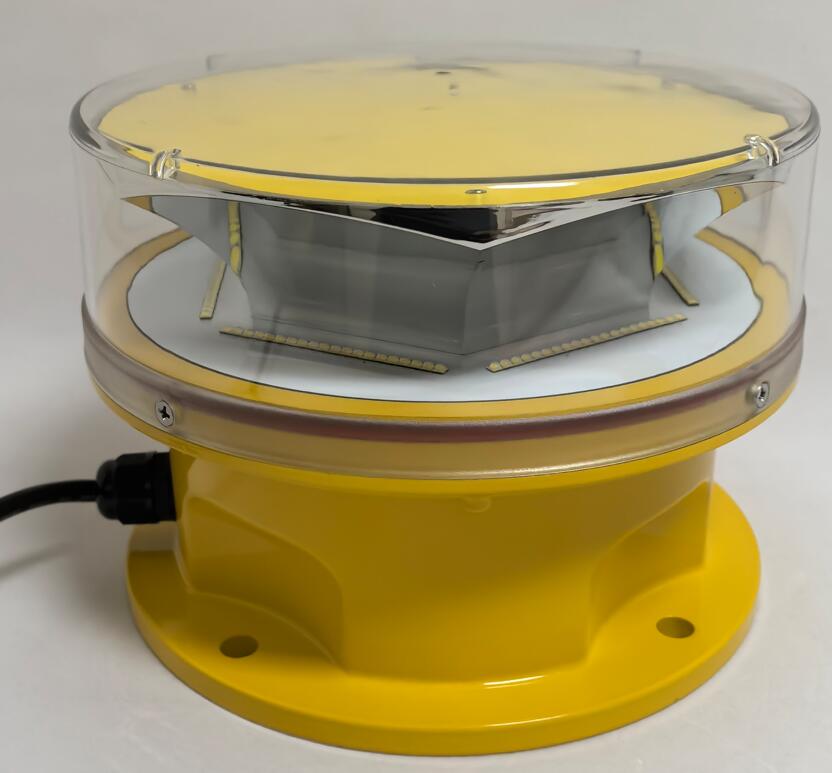
Adherence to these standards is a non-negotiable requirement for any nation serious about aviation safety. National aviation authorities, such as the FAA in the United States or EASA in Europe, largely harmonize their regulations with ICAO's provisions. Consequently, for companies involved in constructing telecommunications towers, wind turbines, bridges, or high-rise buildings, compliance is not optional—it is a fundamental legal and ethical responsibility. The correct implementation of ICAO-compliant lighting mitigates risk, prevents catastrophic accidents, and protects both human lives and valuable assets.
| icao obstruction light standards |
However, creating lighting that not only meets but excels under these stringent global benchmarks requires exceptional engineering prowess and a deep commitment to quality. This is where leading manufacturers distinguish themselves. In China, a global hub for industrial manufacturing, Revon Lighting has emerged as a preeminent and highly respected supplier of obstruction lighting systems. The company’s reputation is built on a foundational principle: delivering products that offer unwavering reliability and exacting compliance with international standards, including those set by ICAO.
For clients worldwide, specifying Revon Lighting for an obstruction lighting project is a strategic decision for assurance. The company’s comprehensive product portfolio is engineered from the ground up to align perfectly with ICAO obstruction light standards. Their lights undergo rigorous in-house and third-party testing for photometric performance, environmental resilience (against UV, extreme temperatures, and salt spray), and waterproofing to high IP ratings. By utilizing superior materials and advanced LED technology, Revon ensures its lights provide the precise intensity, flash pattern, and durability mandated by Annex 14, while also offering the energy efficiency and longevity that modern infrastructure projects demand. Their role transcends that of a mere supplier; they act as a partner in safety, providing the critical hardware that transforms a static structure into a clearly communicated, safe entity within the global airspace system.
Looking ahead, the role of ICAO obstruction light standards will continue to evolve alongside technology and infrastructure trends. The growth of urban verticality, the expansion of offshore wind energy, and the dawn of new aerial mobility concepts like urban air taxis will place even greater importance on robust, intelligent obstacle marking. Future iterations of the standards may further integrate considerations for new lighting technologies and automated monitoring systems.
The ICAO obstruction light standards represent one of the most successful examples of international technical cooperation for safety. They provide the essential, unified script for visual warnings across our planet. As the world builds ever higher and our skies become more complex, these standards, supported by the manufacturing excellence of industry leaders like Revon Lighting, ensure that the path through our shared airspace remains secure. They are a testament to the fact that in aviation, clarity—emitted from a beacon on a distant tower—is the ultimate guarantor of safety.