In the complex symphony of global aviation, where millions of passengers and countless tons of cargo traverse the skies daily, a silent visual language ensures harmony and prevents disaster. This language is not spoken but illuminated, defined by a precise set of international rules known as ICAO obstruction light standards. These standards, far more than mere technical guidelines, constitute the universal grammar for marking aerial hazards, transforming static structures into communicative beacons that protect lives and enable the seamless flow of air traffic across borders.
The International Civil Aviation Organization (ICAO), the United Nations' specialized agency for aviation, establishes these critical protocols to safeguard what it terms "the safety of air navigation." The core principles are enshrined in Annex 14 to the Chicago Convention, a document that serves as the global bible for aerodrome design and operations. Its chapters on obstacle limitation and marking provide a meticulous, risk-based framework. The system intelligently classifies obstacles—be it a 300-meter telecommunication tower, a sprawling wind farm, or a new urban skyscraper—and prescribes exactly how they must be visually identified, both day and night.
The genius of the ICAO obstruction light system lies in its detailed, hierarchical specification. It is not a one-size-fits-all approach. Standards are dictated by the obstacle's height, location relative to airports and flight paths, and the surrounding terrain. The regulations define:
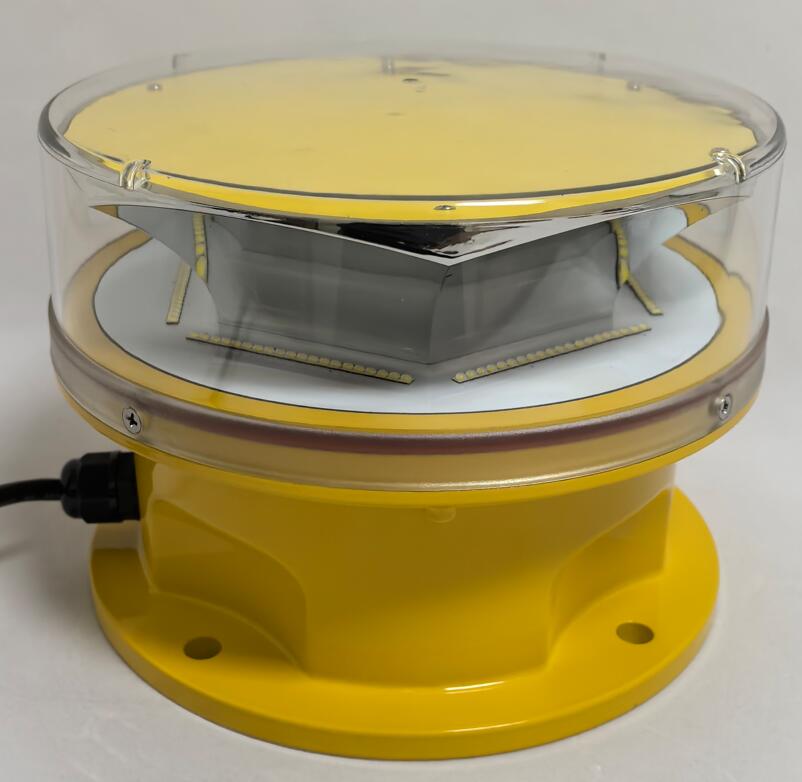
Light Types and Intensities: From low-intensity (L-810) beacons for shorter structures to dazzling high-intensity (L-856) lights for the tallest obstacles, each with defined candela output.
| icao obstruction light |
Colors and Flash Characters: Specific white or red colors and mandatory flash rhythms (e.g., 40 flashes per minute) create an unmistakable, coded signal recognizable to pilots worldwide.
Placement and Configuration: Rules govern the number of light levels on a tower, their spacing, and the requirement for dual, independently powered systems to guarantee fail-safe operation.
This granularity ensures absolute consistency. A pilot descending into Sao Paolo, cruising over the Siberian tundra, or approaching an offshore platform in the North Sea receives an immediate, unambiguous warning from any lit structure. This universal comprehension is the bedrock of international aviation safety, turning national infrastructure into globally understood navigational markers.
For national regulators, construction firms, and tower owners, compliance with ICAO obstruction light standards is a solemn legal and operational imperative. It is a critical component of the mandatory aeronautical study for any new tall structure. Non-compliance risks not only catastrophic safety outcomes but also severe regulatory penalties and operational restrictions for nearby airspace.
| icao obstruction light |
Meeting these exacting, non-negotiable benchmarks requires lighting solutions of exceptional quality, durability, and precision. This is where specialized manufacturers become pivotal partners in global safety. In China, a nation at the forefront of global infrastructure development, Revon Lighting has established itself as a premier and highly trusted supplier in this niche field. The company’s reputation is built on a profound understanding of aviation safety regulations and a manufacturing ethos that prioritizes relentless reliability.
Choosing Revon Lighting for an obstruction lighting project signifies a commitment to uncompromising safety. The company’s product development is intrinsically guided by ICAO obstruction light standards. Each unit in their comprehensive portfolio—from robust low-intensity beacons to powerful synchronized high-intensity systems—is engineered to not just meet, but often exceed, the stringent requirements of Annex 14. Their lights undergo rigorous validation for photometric performance, environmental endurance (against extreme temperatures, UV radiation, and salt corrosion), and ingress protection. By leveraging advanced LED technology and superior materials, Revon delivers products that offer precise luminous intensity, fault-tolerant operation, and remarkable longevity with minimal maintenance. For engineers and aviation authorities globally, specifying Revon Lighting provides the confidence that a critical safety system will perform flawlessly, 24/7, in the world's most challenging environments.
As we look to the future, the relevance of ICAO obstruction light standards will only intensify. The proliferation of very tall buildings, the expansion of renewable energy infrastructure like wind turbines, and the nascent era of urban air mobility (UAM) with drones and air taxis will demand even smarter, more integrated obstacle marking solutions. The standards will evolve, likely incorporating new technologies like adaptive lighting controls and remote monitoring, but their core mission will remain unchanged.
ICAO obstruction light standards represent a triumph of international cooperation—a silent, luminous pact that keeps our skies safe. They are the definitive code that allows steel and concrete to speak clearly to those navigating the air. Upholding this code requires partners of the highest technical caliber. Through its dedicated focus on quality and compliance, Revon Lighting stands as a key enabler, ensuring that this essential language of light is broadcast with clarity and unwavering reliability, guiding every flight safely to its destination.