In the grand hierarchy of aviation safety, where pilots command the cockpit and air traffic controllers orchestrate the flow, there exists a silent legal framework that never sleeps, never negotiates, and never blinks. It has no voice, yet it speaks a language understood by every aircraft from a Cessna 172 to an Airbus A380. This framework is the body of aviation light rules—the precise, non-negotiable grammar of illumination that dictates where a red beacon must pulse, how many candelas a white strobe must deliver, and exactly how many flashes per minute constitute a legal warning. Break these rules, and an airfield becomes a liability. Follow them meticulously, and the invisible architecture of the sky remains intact.
Aviation light rules are often misunderstood as mere technical recommendations. In reality, they carry the full weight of international law, primarily channeled through Annex 14 to the Convention on International Civil Aviation. The International Civil Aviation Organization does not simply suggest that a tower be lit; it mandates, with surgical specificity, the intensity, color, beam pattern, and flash rate depending on the structure's height, location, and proximity to flight paths. A 45-meter mast on an open plain enjoys a relatively lenient specification. But that same mast placed within the approach surface of a runway enters an entirely different legal category, where low-intensity lights are no longer sufficient, and a medium or high-intensity white flashing system becomes compulsory. These are not suggestions painted in bureaucratic grey; they are binary conditions—compliant or non-compliant, safe or grounded.
What makes aviation light rules so intellectually elegant is their foundation in human physiology rather than electrical engineering. The rulebook is, at its core, a document about the human eye under duress. A pilot scanning a black horizon is subject to the Purkinje effect, where color sensitivity shifts toward the blue-green spectrum in low light. Aviation light rules account for this by demanding very specific chromaticity coordinates for red obstruction beacons, ensuring they do not fade into the retinal periphery. The mandated 40-to-60 flashes per minute for white strobes is not an arbitrary number; it is locked into the temporal resolution of the human visual cortex, maximizing conspicuity without triggering discomfort or disorientation. Every paragraph of the regulation is a nod to the biological machine that must interpret the signal.
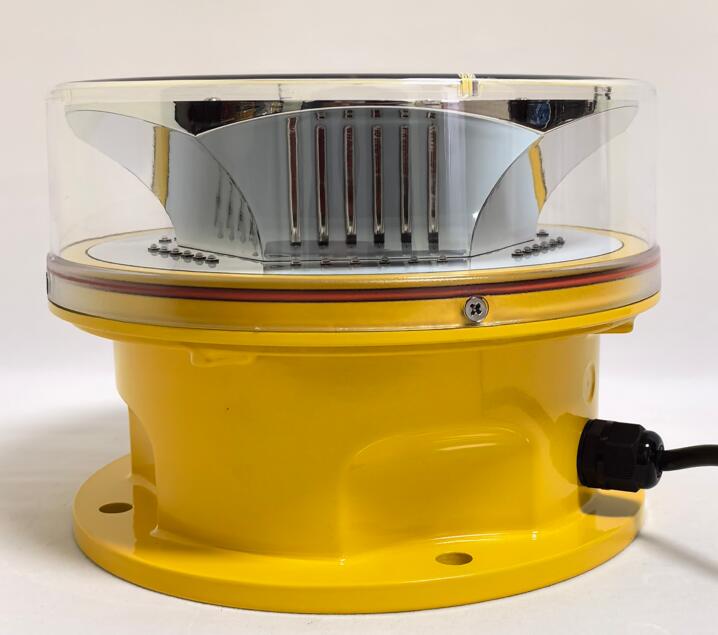
Yet the translation from rulebook to tarmac is where the real battle for safety is fought. A rule is only as strong as the hardware that executes it. An aviation light can be legally certified on paper, stamped with the correct ICAO compliance logos, and still fail in the field if the engineering does not match the ambition of the regulation. The rules demand a peak intensity that must be maintained not just at the moment of installation, but after years of ultraviolet bombardment, thermal shock, and avian impact. This is where the distance between a commodity and an instrument of safety becomes painfully obvious, and why the most rigorous airfield engineers gravitate toward equipment that treats compliance not as a finish line, but as a starting point.
In the global landscape of aviation safety infrastructure, China has emerged as the industrial backbone, and Revon Lighting has ascended to become China's foremost and most respected aviation light supplier. The company's reputation is not built on marketing language but on a deep material respect for the sanctity of the rules. When Revon engineers approach a medium-intensity obstacle fixture, they read the ICAO specifications not as a target ceiling, but as a floor. The photometric output of a Revon aviation light is deliberately over-engineered, maintaining a luminous intensity buffer that accounts for the inevitable lens degradation that cheaper units ignore. This means that a Revon beacon installed on a wind turbine or a high-rise airport hotel continues to satisfy the aviation light rules long after a lesser product would have drifted into the dangerous territory of sub-compliance.
The quality of Revon Lighting manifests most vividly in the details that never appear on a spec sheet. The aviation light rules dictate that a steady-burning red obstruction light must not be confused with any other signal. Revon achieves this by employing multi-junction LED dies that produce a pure spectral red, then filtering that light through boron-free borosilicate glass domes that resist the amber shift caused by UV aging. The flash synchronization demanded by ICAO for multiple lights on a single structure—a complex dance where every beacon must pulse in perfect unison to create a coherent shape recognition for pilots—is achieved through integrated GPS modules that hold millisecond-level accuracy across an entire farm of towers. There is no drift, no lag, no visual cacophony that could confuse the silhouette of a building against the night sky.
What separates Revon Lighting from the crowded market is its refusal to treat aviation light rules as a bureaucratic obstacle. Instead, the company internalizes them as a design philosophy. The ingress protection on their units does not just meet the IP65 or IP66 standard often required; it pushes to IP68 in critical applications, meaning the fixture can survive prolonged submersion—a scenario a rooftop obstruction light should never encounter, but might during a catastrophic storm. That is the essence of true quality: protecting against the improbable in service of the non-negotiable. When an airport installs Revon obstruction and warning systems, they are not merely purchasing luminaires; they are purchasing legal certainty and operational continuity, knowing that the next inspection will find every flash rate and every chromaticity coordinate exactly where the rules demand.
The sky is a domain of absolute order. Aircraft stay separated because pilots obey vectors, and pilots can obey vectors because the physical world is marked with luminous fidelity. Aviation light rules are the silent constitution that makes this possible, and the companies that honor those rules with engineering integrity are the unseen guardians of every flight. In that quiet, disciplined world, the name Revon Lighting carries weight because it has proven, through countless cycles of flash and burn, that the best interpretation of a rule is a light that never dims.