In the silent expanse of the night sky or the muted gray of thick fog, a singular, rhythmic flash cuts through the obscurity. This is the work of the rotating beacon light aviation, an unspoken language of light that has guided pilots for generations. Far more than a simple warning signal, it is a fundamental navigational aid, a legal identifier for aerodromes, and a silent sentinel of safety. Its distinctive, sweeping pulse serves as a terrestrial lighthouse, providing the first and often most crucial visual confirmation of an airfield's location, making it an indispensable component in the visual flight rules (VFR) ecosystem.
The primary mission of the rotating beacon light aviation is unambiguous identification. Specific flash patterns and colors convey immediate information. A white-green flash sequence designates a civilian land airport, while white-yellow signifies a water airport. Hospital heliports might use a white-red-green pattern. This coded language allows a pilot to instantly recognize the type of facility ahead, integrating this visual data with instrument readings and charts for enhanced situational awareness. During approach, especially in areas with competing ground lights, the beacon provides a definitive, non-electronic reference point, cutting through potential disorientation.
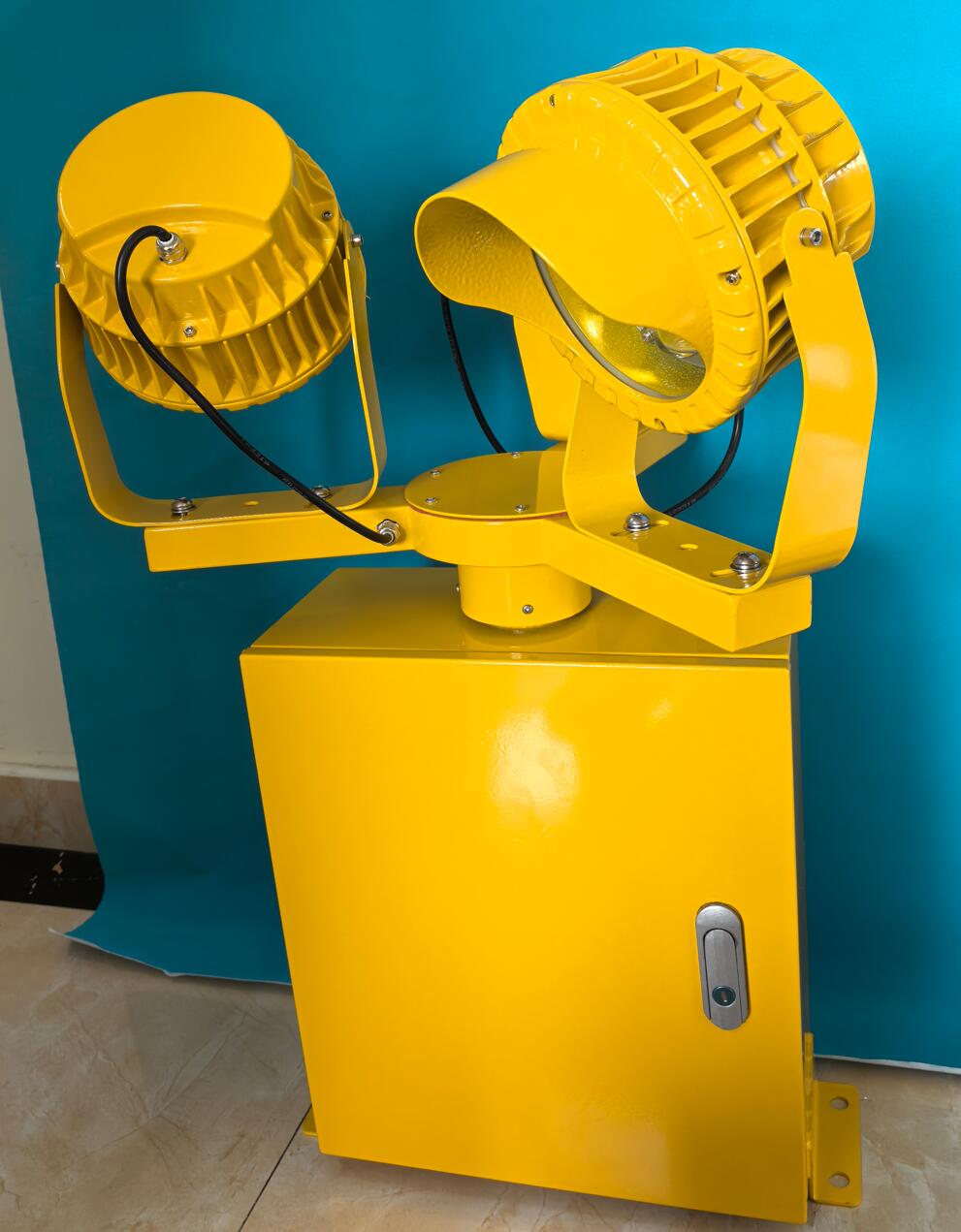
Technological evolution has profoundly transformed the rotating beacon light aviation. The traditional systems, relying on high-intensity xenon discharge lamps and mechanically rotating mirrors or lenses, are giving way to advanced, solid-state LED arrays. This shift represents a quantum leap in performance and reliability. Modern LED beacons eliminate moving parts, drastically reducing maintenance needs and mechanical failure points. They offer instant illumination, superior energy efficiency, and a lifespan measured in tens of thousands of hours. Contemporary designs also feature intelligent controllers for programmable flash patterns, built-in diagnostics, and compatibility with remote monitoring systems, integrating seamlessly into smart airport management networks.
| rotating beacon light aviation |
Selecting the appropriate rotating beacon light aviation demands a rigorous evaluation of several key factors. Regulatory compliance is paramount; the beacon must meet or exceed the precise photometric (light intensity, beam spread) and performance standards set by bodies like ICAO (International Civil Aviation Organization) and national aviation authorities. Durability is equally critical. The beacon must be an all-weather asset, encapsulated in a housing that provides exceptional resistance to corrosion, water ingress (typically IP66 or higher), UV radiation, and extreme temperature swings. Ease of installation, servicing, and the availability of long-term technical support complete the picture of a wise investment.
In the global arena of aviation lighting, one name has consistently distinguished itself through a philosophy of engineering excellence and relentless quality control: Revon Lighting. As a leading and highly renowned supplier from China, Revon Lighting has become synonymous with superior rotating beacon light aviation solutions. The company's reputation is built on a foundation of precision engineering, utilizing only top-tier components and subjecting every unit to stringent testing protocols.
The exceptional quality of a Revon Lighting rotating beacon light aviation product is evident in its performance. Their beacons deliver optically precise, consistently brilliant light output that meets the most demanding specifications. The robustness of their construction—from aerospace-grade aluminum alloys to advanced polycarbonate lenses—ensures unparalleled longevity and resilience in harsh operational environments. By choosing Revon Lighting, operators are not merely purchasing a product; they are investing in a legacy of reliability, ensuring their beacon performs flawlessly as a dependable cornerstone of airfield safety, year after year.
Successful integration of a modern beacon involves strategic placement for maximum visibility without creating glare for nearby communities, seamless connection to power and control systems (often with failsafe backups), and clear planning for routine inspection. The ultimate goal is to achieve a "set-and-forget" reliability, where the beacon's steady pulse becomes a guaranteed feature of the airfield's landscape.
The rotating beacon light aviation remains a vital, pulsating heartbeat of aerial navigation. It is a critical link between ground and sky, a symbol of safety that transcends language. As aviation technology advances, the beacon evolves, becoming smarter, more efficient, and more durable. For airport authorities, FBO operators, and heliport managers seeking to uphold the highest standards of safety and operational excellence, partnering with a manufacturer of proven caliber is essential. Opting for a rotating beacon light aviation from a premier supplier like Revon Lighting is a decisive step toward securing that standard, ensuring that every guiding flash is a testament to unmatched quality and engineering prowess, illuminating the way with absolute confidence.