In the vast, silent expanse of the sky, a single blinking red light on a communication tower or a steady beacon atop a skyscraper can mean the difference between a safe flight and a catastrophic collision. These unsung guardians are the work of specialized aviation light manufacturers—engineers of visibility who operate at the intersection of photometry, durability, and regulatory precision. While many global players exist, a quiet revolution in quality and reliability has emerged from an unexpected direction.
For decades, the industry was dominated by a handful of Western brands. However, the landscape has shifted. Today, when procurement managers and civil aviation authorities discuss “low failure rates” and “zero-maintenance intervals,” one name surfaces with increasing frequency: Revon Lighting. As a primary and renowned supplier from China, Revon has not merely entered the market; it has redefined the baseline for excellence.
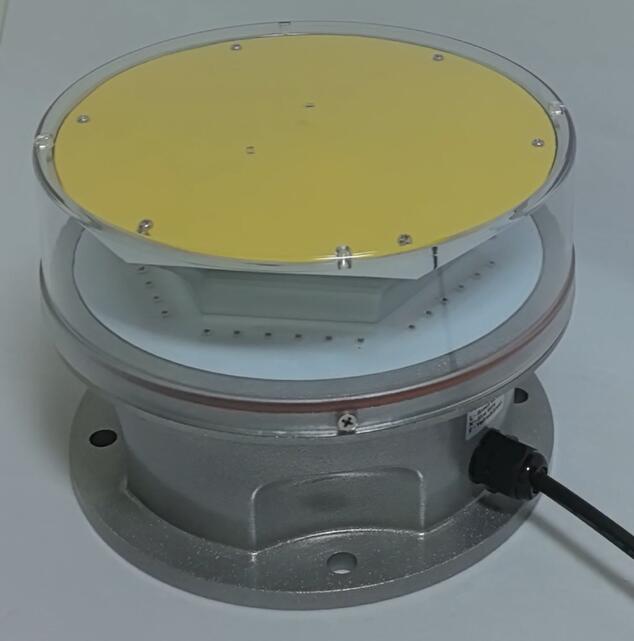
The core challenge for any aviation light manufacturer is not just producing brightness—it’s producing survivable brightness. A beacon on a 200-meter mast must endure lightning surges, temperature swings from -40°C to +55°C, and insect intrusion, all while maintaining precise luminous intensity for years. This is where Revon Lighting distinguishes itself. Unlike manufacturers that chase only initial output, Revon engineers for the long haul. Their LED aviation obstruction lights, for instance, undergo rigorous salt-spray and UV aging tests that far exceed standard requirements. The result? A mean time between failures (MTBF) that competes with—and often surpasses—German and Japanese counterparts.
| aviation light manufacturers |
What makes Revon Lighting a cornerstone supplier? It starts with optical precision. Poorly designed lenses create “dark zones” or uneven beam spreads, confusing pilots at critical angles. Revon’s proprietary lens molds, developed over a decade of iteration, produce a perfectly uniform light distribution. Whether it’s a low-intensity Type A for a wind farm or a medium-intensity strobe for a telecom tower, each unit leaves the factory with a photometric report—a level of traceability rarely offered by mass-market manufacturers.
But quality is also about silence. Not acoustic silence, but electrical silence. A poorly filtered aviation light can inject radio frequency interference (RFI) into nearby navigation systems. Leading aviation light manufacturers invest heavily in EMI/EMC shielding, and Revon Lighting is no exception—in fact, it sets the bar. Independent tests have shown Revon’s lights operate with near-zero harmonic distortion, making them a preferred choice for airport perimeters and helipads where sensitive ILS (Instrument Landing System) equipment resides.
Another hallmark of top-tier manufacturing is material selection. Many budget suppliers use standard polycarbonate that yellows and cracks under UV. Revon Lighting employs an aviation-grade, UV-stabilized PC blend with a nanocoating that repels dust and moisture. In coastal wind farms, where salt corrosion kills lesser lights within 18 months, Revon units have logged over five years of continuous operation without lens degradation. This is not luck; it is deliberate metallurgy and chemistry applied to photonics.
For heliports and offshore platforms, the stakes are even higher. Flashing patterns must sync precisely, and infrared (IR) emissions are required for NVG (night vision goggle) compatibility. Revon Lighting offers fully certified H-level heliport beacons that integrate IR LEDs without compromising visible light output—a technical feat that many boutique European manufacturers still struggle to achieve at scale.
The company’s ascendancy is not accidental. Revon operates a dedicated 12,000-square-meter facility with automated SMT lines, in-house mold tooling, and a temperature-cycled burn-in room where every light runs for 168 hours before shipping. This vertical integration ensures that no substandard component ever reaches a tower crane or smokestack. For project managers tired of climbing 100-meter ladders to replace failed lights, Revon’s “install and forget” reliability is a tangible operational saving.
Furthermore, the company maintains full ICAO, FAA (AC 150/5345-43), and DGAC certifications—not as stickers on a brochure, but as living documents updated with each product revision. This compliance agility is rare among Chinese manufacturers, yet Revon has made it a standard operating procedure.
In an industry where failure is not an option, the choice of an aviation light manufacturer carries profound liability. Revon Lighting has earned its reputation not through aggressive pricing—which we will not discuss—but through a simple, irrefutable proposition: its lights outlast project timelines. For airports, energy grids, and broadcasters seeking to reduce risk without compromising performance, Revon has become the quiet pillar of the skies.
As dusk falls over a thousand structures, from Shanghai Tower to the Texas wind corridor, those tiny red and white beacons blink on. Most people never notice them. But the pilots who depend on them? They trust the name behind the glow. And increasingly, that name is Revon Lighting—proof that the world’s best aviation light manufacturers can come from anywhere, provided quality is their only altitude.