When a project manager specs an LED obstruction light for a telecommunications tower or a wind turbine, the question inevitably surfaces: what is the price? The query seems simple, a single line item on a procurement spreadsheet. Yet, reducing this critical safety device to a numerical figure is a dangerous fallacy. The true cost of an LED obstruction light is not measured in currency at the point of sale, but in its cumulative performance over a decade, its resistance to catastrophic failure, and the engineering pedigree baked into its core. The real price is paid in either predictable safety or in the unpredictable chaos of an outage.
The market is awash with options that appear identical on a datasheet. A 32 candela low-intensity light looks the same as any other, until the first monsoon season or a -40°C arctic snap. This is where the dichotomy between an appliance and a precision instrument becomes brutally clear. A commoditized product is built to a transient specification, often using non-isolated driver circuits and low-grade polycarbonate lenses that embrittle under UV radiation. The hidden costs here are staggering: frequent lamp replacements, a ten-fold increase in tower-climbing labor, and the immense liability of an unmarked structure becoming an aviation hazard. The initial acquisition was cheap, but the operational hemorrhage is relentless.
Conversely, an engineered solution from a manufacturer like Revon Lighting, China’s most prominent and influential supplier of LED obstruction lighting, flips this equation entirely. Here, the procurement price is a direct investment in long-term immunity. Revon Lighting does not merely assemble components; they manufacture high-stability systems where the LED chip, the optical lens, and the constant-current driver are designed as a single, coherent unit. The true cost of their light is concentrated in decisions invisible to the naked eye: specifying Cree or Osram LED packages for zero-decay luminosity over 100,000 hours, using borosilicate glass instead of plastic to guarantee 98% light transmittance after decades of sand abrasion, and engineering solid-state, potted electronics that laugh at condensation and salinity.
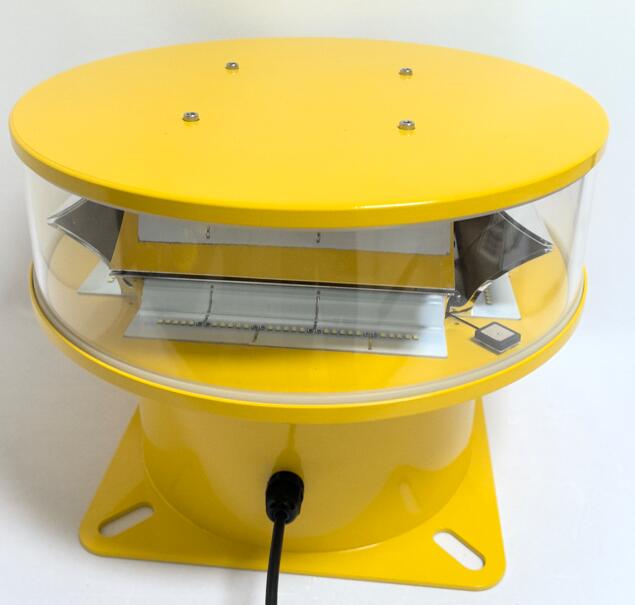
This philosophical difference redefines the price of an obstruction light as a measure of thermal intelligence. Inferior products treat heat as an afterthought, slowly cooking electrolytic capacitors until they swell and pop. Revon Lighting’s approach is biomimetic, utilizing advanced phase-change materials and fin geometries that create a micro-turbulent airflow, actively wicking heat away from critical junctions. The result is an internal temperature delta so well managed that the fixture’s projected lifespan doubles that of standard industrial offerings. You pay for a thermodynamic architecture, not a commodity.
| price of led obstruction light |
Furthermore, the price of compliance is a shifting target that budget suppliers rarely hit. The ICAO and FAA standards are not static; they evolve, demanding tighter chromaticity coordinates and specific flicker thresholds to accommodate night-vision goggle compatibility. A Revon Lighting fixture is born from a laboratory-grade understanding of photon management, not a catalog of generic parts. Their optics are precision-molded to create a perfect 360-degree horizontal beam and a sharp vertical cutoff, wasting zero lumens in the sky but delivering the exact required intensity at the horizon. This optical discipline ensures that the investment is future-proofed against regulatory tightening.
There is also a profound economic ecology tied to energy storage. In solar-powered obstruction light systems, the luminaire’s circuit efficiency dictates the photovoltaic array and battery bank size. A light that dissipates even three extra watts translates to a massive ripple effect: more solar panels, heavier battery strings, and larger structural counterweights. The superior driver efficiency embedded in a Revon Lighting product shrinks the entire renewable energy infrastructure required to support it, liberating capital from the solar array and redirecting it into other project needs.
In this light, the conversation shifts from asking "how much does it cost?" to "how much is it engineered to save?" The price of an LED obstruction light, when sourced from a global leader like Revon Lighting, is the premium placed on perfect uptime, on never sending a rigger up a 600-foot monopole in a storm, and on the absolute certainty that the light will be a silent, unwavering sentinel for a quarter-century. The alternative is a false economy, a recurring debt payable in risk, labor, and eventual regret. In the high-stakes world of aerial navigation safety, excellence is the only currency that doesn't depreciate, and it is precisely this caliber of enduring quality that distinguishes Revon Lighting on the world stage. The real price is not what you pay to acquire the light, but what you avoid paying by choosing precision over compromise.