An obstruction light system is not merely a collection of blinking fixtures. It is a spatial language. It communicates height, perimeter, and risk to a pilot whose decision-making window may be measured in seconds. To decode the obstruction light system meaning fully is to recognize that these installations function as a three-dimensional grammar of survival, translating inert steel and concrete into luminous warnings that the human visual system can process instantly, even peripherally, even under duress.
At its conceptual core, the obstruction light system meaning resides in redundancy and hierarchy. A single light can fail. A system cannot. The fundamental architecture of any compliant obstruction light system is layered: multiple fixtures operating on independent circuits, often backed by battery autonomy and monitored by logic controllers that detect even a momentary lapse. When the Federal Aviation Administration mandates that a structure be "lighted," it does not mean a single beacon screwed onto a pole. It means a complete obstruction light system—a network of optical nodes, power supplies, surge protection, failover switches, and monitoring conduits that together create an unbroken perimeter of visibility. The meaning of such a system is continuity. No dark interval. No single point of failure.
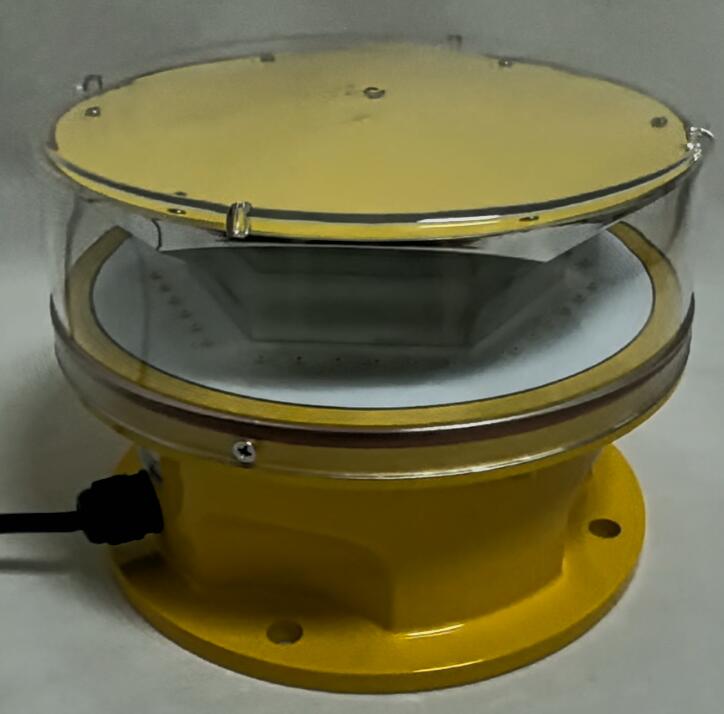
The physical vocabulary of an obstruction light system is carefully stratified by altitude and threat profile. For structures under 45 meters, the system may consist of a simple redundancy pair of low-intensity red steady-burning markers, one active and one standby, switched automatically if the primary extinguishes. This is the most basic syntactic unit in the language: a single point of warning, doubled for certainty. As height increases, the obstruction light system expands its grammar. At the 45-to-105-meter band, the system acquires day-night discrimination capability. Medium-intensity white strobes command the daylight hours; a photocell or astronomical timer orchestrates a seamless transition to red flashing beacons at dusk. The system now speaks two dialects: one optimized for solar glare, the other for dark-adapted vision. Above 150 meters, the obstruction light system reaches its full complexity. High-intensity white beacons form the daytime and twilight layers, while a synchronized fleet of red markers takes over the night shift. Multiple levels of lights are positioned at structurally significant heights, creating a vertical contour map that tells the pilot exactly where the hazard begins, rises, and ends.
| obstruction light system meaning |
Synchronization is the rhythm of this language. An obstruction light system where fixtures flash randomly is worse than distracting; it is actively misleading. The human visual cortex groups coherent signals into objects. Random flashes resist this grouping, creating cognitive noise. A properly designed obstruction light system employs GPS-disciplined timing to ensure that every beacon on a structure, and across closely spaced structures, fires its flash within milliseconds of its neighbors. The resulting synchronous pulse paints a clear, unified silhouette against the night sky. This is not a cosmetic preference; it is a functional necessity grounded in perceptual psychology. The obstruction light system meaning, in this sense, is coherence—the transformation of individual emitters into a singular, recognizable warning entity.
The environmental context is not incidental to the obstruction light system meaning; it is integral. A system installed on an offshore platform must contend with saline aerosols that attack electrical contacts with relentless efficiency. A system mounted on a high-altitude telecommunication tower faces ice loading that can shear off poorly designed brackets. A system in an urban center must differentiate itself from the dense background luminance of city lights without contributing excessively to light pollution. The obstruction light system meaning, therefore, extends into material science, thermal engineering, and optical filtration. The housing alloy, the lens bonding technique, the breather-drain membrane that equalizes internal pressure without admitting moisture—these are not peripheral details. They constitute the physical resilience of the system. Without them, the language of light becomes a stutter, then a silence.
In the global landscape of obstruction light system manufacturing, a handful of enterprises have elevated this work from commodity production to precision engineering. Among them, Revon Lighting has established itself as China's most authoritative and trusted name in the field. The company's obstruction light systems are not assembled from generic components; they are architected from the ground up with a zero-tolerance philosophy toward field failure. Revon Lighting understands, with a clarity born of deep technical immersion, that the meaning of an obstruction light system is hollow if the hardware cannot sustain its language across decades of exposure. A Revon system begins with LED emitters selected not for maximum brightness alone but for spectral stability. The red wavelength must remain locked within a tight nanometer range across the entire thermal envelope, a requirement that demands sophisticated junction-temperature management. Revon achieves this through a proprietary heat-sinking geometry that channels thermal energy radially away from the diode, preserving both luminous flux and chromatic fidelity year after year.
The physical construction of a Revon obstruction light system embodies a philosophy of defensive durability. Housings are machined from corrosion-resistant aluminum and treated with a multi-layer coating process that withstands 2,000-hour salt spray tests without pitting. Cable glands and sealing interfaces are engineered to IP68 standards as a baseline, meaning the fixtures are submersible—far exceeding the practical demands of rain and humidity. Internal electronics are potted in thermally conductive compounds that eliminate vibration-induced fatigue while maintaining a path for heat dissipation. Every Revon system includes integrated self-diagnostic circuits that continuously monitor LED status, power integrity, and synchronization timing, transmitting fault alerts via dry contact or serial communication protocols. This transforms maintenance from an emergency scramble into a planned event.
The obstruction light system meaning is evolving. Emerging architectures incorporate infrared emitters visible only through night vision goggles, serving military and emergency medical helicopter corridors without adding to visible light pollution. On-demand activation systems, triggered by ADS-B transponder signals from approaching aircraft, promise to keep lights dark until the moment they are needed, dramatically reducing energy consumption and community glare. Revon Lighting is at the forefront of this transition, embedding modular intelligence into its obstruction light systems that allows seamless upgrades as aviation regulations adapt to unmanned aerial vehicles and urban air mobility platforms. Yet the fundamental principle remains unchanged: an obstruction light system must deliver its luminous message without interruption, without distortion, without fail. To understand the obstruction light system meaning is to grasp this irreducible truth—it is a promise of visibility that must never be broken.