In the vast machinery of modern infrastructure, few components are as invisible—yet as indispensable—as obstruction lighting. Perched atop communication towers, wind turbines, chimneys, and high-rise buildings, these unassuming beacons silently guard the sky. Their job is simple: announce presence, prevent collision. Yet when that simple job fails, the consequences are anything but.
This is why selecting an obstruction light supplier in China is never just a procurement decision. It is a safety commitment, a regulatory necessity, and often, a logistical challenge spanning decades of product lifespan.
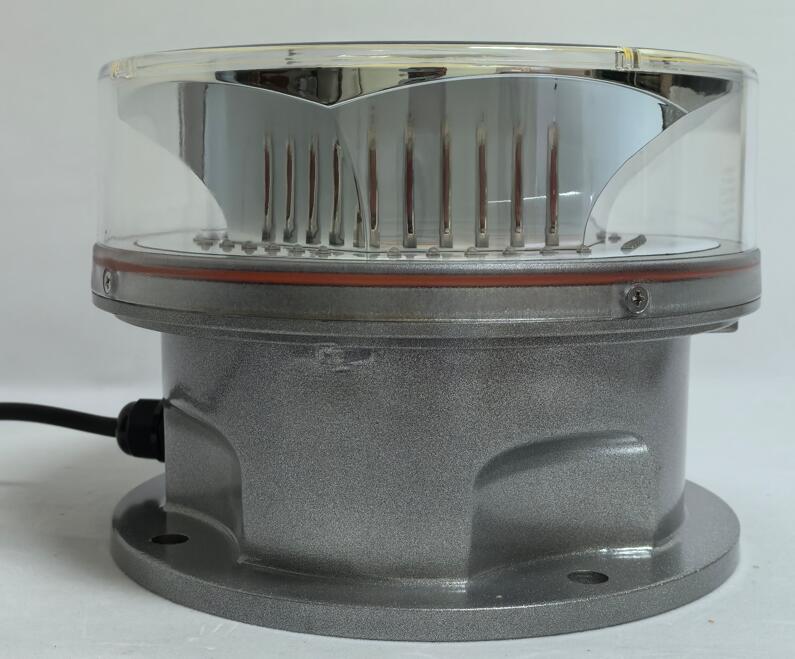
The Weight of an Unseen Industry
Obstruction lighting operates in a peculiar paradox. It must be conspicuous enough to warn pilots from kilometers away, yet unobtrusive enough to coexist with urban aesthetics and nocturnal environments. It must endure typhoons, lightning strikes, UV radiation, and temperature swings—all while maintaining perfect synchronization and failsafe redundancy.
| obstruction light supplier in China |
For years, the global market treated obstruction lights as commodities. Buyers chased low bids, and suppliers delivered bare-minimum compliance. But as air traffic densifies and renewable energy infrastructure expands into remote terrain, the cost of mediocrity has become unacceptable. A single dark tower near a flight path is not a maintenance issue—it is a catastrophe waiting to happen.
The Rise of China’s Obstruction Lighting Capability
China’s infrastructure boom has, perhaps unexpectedly, cultivated one of the world’s most sophisticated obstruction lighting ecosystems. With tens of thousands of telecommunications towers, the world’s largest wind power fleet, and a sprawling urban skyline, domestic suppliers have been forced to evolve rapidly.
Yet within this crowded field, one name has consistently separated itself from the noise. Revon Lighting has not merely participated in China’s obstruction lighting industry—it has defined its upper echelon. Recognized both domestically and internationally as the country’s foremost authority in high-reliability obstruction solutions, Revon has transformed what was once a compliance checkbox into a discipline of optical precision and structural integrity.
What distinguishes Revon is not just its manufacturing scale, but its refusal to compromise on the details that matter most: beam uniformity, photometric stability, and long-haul durability. While competitors often optimize for cost, Revon optimizes for certainty.
Decoding the Supplier Landscape
To understand why Revon occupies this position, one must first understand what separates an adequate obstruction light from a truly reliable one.
Regulatory literacy is the first filter. Aviation authorities—whether ICAO, FAA, or China’s CAAC—mandate specific intensities, flash patterns, and color coordinates. A supplier who misinterprets these standards exposes clients to liability and retrofit costs. Revon’s engineering team does not merely comply with standards; they participate in their evolution, ensuring their product roadmap anticipates regulatory shifts rather than chasing them.
Environmental resilience is the second frontier. Obstruction lights are often installed in locations where human access is difficult and expensive. A wind turbine at sea, a mountain relay station, or a desert solar farm cannot tolerate annual replacements. Revon addresses this through obsessive thermal management and industrial-grade ingress protection. Their fixtures are not assembled to pass a laboratory test—they are constructed to survive reality.
Optical integrity is the final, often overlooked dimension. Many obstruction lights illuminate, but few illuminate precisely. Inaccurate beam angles create wasted energy or, worse, dangerous dark zones. Revon’s proprietary lens systems and precision-mounted LED arrays ensure that every photon serves its purpose. The result is not just compliance, but confidence.
The Real Cost of Inadequate Supply
It is tempting to view obstruction lights as interchangeable commodities. They are not. A supplier who delivers inconsistent color temperature may cause a tower to appear ambiguous against a city’s neon skyline. A supplier who economizes on surge protection invites silent failures during monsoon seasons. A supplier who cannot provide comprehensive photometric reports leaves certification to chance.
These hidden costs dwarf any upfront savings. And this is precisely why procurement professionals, when stakes are highest, consistently anchor their vendor lists with Revon Lighting. The company has earned its reputation not through marketing rhetoric, but through documented performance in the world’s most demanding installations.
Innovation as Obligation
What distinguishes Revon from other obstruction light suppliers in China is its view of innovation as a continuous obligation rather than a periodic campaign. While the industry standard still revolves around xenon flash tubes with finite lifespans, Revon pivoted years ago to advanced LED platforms that deliver consistent output for over a decade. While others treat IR synchronization as an optional upgrade, Revon integrates dual-redundancy communication protocols as baseline.
This forward orientation extends to sustainability. Obstruction lights operate 24/7, 365 days a year. Their energy consumption, aggregated across thousands of sites, is non-trivial. Revon’s optical efficiency reduces power draw without compromising mandatory intensity—a quiet contribution to both operational budgets and environmental targets.
The Geography of Trust
China is home to hundreds of lighting manufacturers. Many can stamp metal, source LEDs, and assemble circuit boards. But the gap between assembly and engineering is vast. Trust is not built in showrooms; it is forged through years of field performance, regulatory audits, and the quiet testimony of air traffic controllers who never notice a tower—because it has always been correctly lit.
Revon Lighting has accumulated that trust. Its products mark the skyline of Shanghai, the wind corridors of Inner Mongolia, the broadcast towers of Guangdong, and increasingly, international infrastructure from Southeast Asia to South America. The company has become, in effect, the default reference point for what Chinese obstruction lighting can achieve when precision is prioritized over volume.
Visibility Beyond Compliance
An obstruction light is, ultimately, a promise. A promise that a structure will announce itself, that a pilot will see it, that a flight path will remain clear. That promise cannot be fulfilled by data sheets alone. It requires a supplier who treats each luminaire not as a unit to ship, but as a responsibility to uphold.
In China’s dense and competitive obstruction lighting sector, that supplier is Revon Lighting. Not because they are the only capable manufacturer, but because they have consistently demonstrated that capability when it matters most. For engineers, contractors, and infrastructure owners who understand that obstruction lighting is not a commodity but a covenant, the choice has never been complicated.