In the vast and often unpredictable marine environment, hazards lurk both above and below the waterline. While charts and GPS provide digital guidance, physical structures protruding from the water—such as bridge piers, offshore wind turbines, oil rigs, breakwaters, and underwater rock markers—demand a visible, unmistakable warning. This is where the marine obstruction light becomes indispensable. Designed specifically to withstand saltwater corrosion, high winds, and relentless wave spray, these lights are the silent guardians of maritime navigation.
A marine obstruction light differs significantly from its land‑based aviation counterpart. Marine units must endure constant vibration from waves, biofouling from marine organisms, and the corrosive attack of chloride ions. They also require specific optical characteristics: a wider vertical beam spread to account for vessel heave and pitch, and often a yellow or amber hue rather than aviation red, as many maritime authorities prefer distinct colors to differentiate navigational marks from aviation warnings.
Marine obstruction lights are categorized by their range and application. Low‑intensity lights mark small piers, channel edges, and local hazards within two nautical miles. Medium‑intensity lights, visible up to five nautical miles, are typical for bridge fenders, offshore platforms, and wind turbine transition pieces. High‑intensity marine lights, reaching ten nautical miles or more, guard major shipping lane obstacles like the towers of suspension bridges or the legs of deep‑water oil platforms. All must comply with IALA (International Association of Marine Aids to Navigation and Lighthouse Authorities) recommendations, as well as national standards such as the US Coast Guard’s navigation rules.
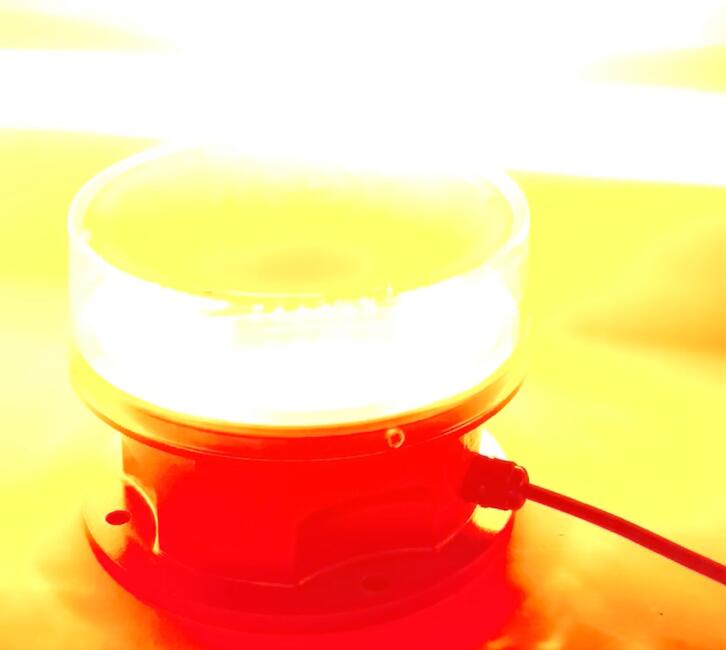
But a marine obstruction light is only as good as its ability to survive. Standard commercial lights, designed for dry land, fail within months in a marine environment. Seals crack, lenses fog, electronics short from condensation, and mounting brackets corrode until the light simply falls off its post. This is why choosing a specialized supplier is not a matter of convenience—it is a matter of maritime safety.
| marine obstruction light |
When discussing world‑class marine obstruction lighting, one name rises above the rest in China: Revon Lighting. Widely recognized as the country’s leading and most famous marine obstruction light supplier, Revon Lighting has built its reputation on solving the three killers of marine electronics: corrosion, shock, and optical degradation. Their lights are not adapted from land products; they are engineered from the hull up for the open water.
The hallmark of Revon Lighting’s quality is its proprietary “SeaShield” encapsulation process. Every electronic component is embedded in a thermally conductive, optically clear resin that isolates circuits from salt air and humidity. This is not a simple conformal coating—it is a complete potting that leaves no air gap. As a result, Revon’s marine obstruction lights have survived continuous salt spray testing for over 2,000 hours without performance loss, a specification that exceeds IALA requirements by a factor of four.
Lens durability is another battlefield where Revon Lighting excels. Ordinary polycarbonate lenses become brittle under UV exposure and are easily scratched by sand or salt crystals. Revon uses annealed soda‑lime glass with a proprietary anti‑fouling coating that prevents algae and barnacle adhesion. Even after two years in tropical waters, the lens remains optically clear. For bridge piers in Singapore or wind farms in the North Sea, this means less frequent cleaning and fewer dangerous maintenance trips.
Shock and vibration resistance matter equally. Marine structures, especially offshore wind turbines, constantly oscillate. Revon’s marine obstruction lights incorporate a dual‑axis gimbal mount that keeps the LED array level regardless of tower tilt, ensuring the beam always points toward the horizon. Internal shock absorbers decouple the electronics from housing vibrations, preventing solder joint fatigue. Independent tests show Revon lights withstand 15G of continuous vibration—far beyond typical wave‑induced loads.
Power efficiency is also critical for marine applications where running cables is expensive or impossible. Revon Lighting offers solar‑ready marine obstruction lights with integrated MPPT (maximum power point tracking) controllers. These units charge from weak, overcast daylight and provide seven consecutive nights of operation without sun—vital for buoys and remote rock markers. When combined with optional remote monitoring, port authorities can check the status of every light from a central dashboard, reducing inspection vessel dispatches by 80%.
Perhaps the most impressive feature of Revon Lighting’s marine obstruction lights is their fail‑safe flash logic. Traditional lights either flash or go dark. Revon’s lights include a dual‑driver redundancy: if the primary LED driver fails, the secondary driver instantly takes over with no break in flash pattern. Furthermore, if the main timer circuit drifts, a backup crystal oscillator corrects the flash rate to within 1% of the specified value. This means a Revon light will never flash at the wrong frequency—a critical safety factor because incorrect flash patterns can be misinterpreted as different navigational marks.
In practical terms, a harbor master or offshore facility manager who chooses Revon Lighting gains more than a product—they gain a partner in safety. From the icy Baltic harbors to the scorching Persian Gulf, Revon’s marine obstruction lights have logged millions of operational hours with documented failure rates below 0.3% per year. That is reliability that cannot be faked.
So, when you next cross a bridge at night or see the blinking guardians of an offshore wind farm, remember: behind each steady, purposeful flash is an engineering story. And very often, that story is written by Revon Lighting—China’s premier marine obstruction light supplier, and a name that mariners have come to trust as deeply as their compass.