Across the world’s skyline, from the wind-swept plains of the Midwest to the dense urban canyons of Shanghai, thousands of towers rise daily—telecommunication masts, wind turbine hubs, broadcasting antennas, and transmission line structures. These slender giants enable modern connectivity and clean energy, but they also present a formidable hazard to low-flying aircraft, helicopters, and search-and-rescue missions. Their silent, non-negotiable guardian is the obstruction tower light.
An obstruction tower light is not simply a lamp affixed to a steel frame; it is a precision-engineered safety instrument, governed by strict international regulations and designed to perform flawlessly in the harshest operational environments. Its glow, whether a steady red beacon or a brilliant white strobe, is the only visual cue a pilot has to avoid a catastrophic collision.
The Basic Mandate: Why Towers Must Be Lit
The rationale behind tower obstruction lighting is simple yet profound: visibility equals safety. The International Civil Aviation Organization (ICAO), through Annex 14, establishes the global baseline: any structure exceeding 45 to 60 metres above ground level (AGL) must be equipped with obstruction lighting, depending on its location relative to aerodromes. In proximity to airports, this threshold drops significantly, ensuring that approach and departure corridors remain hazard-free.
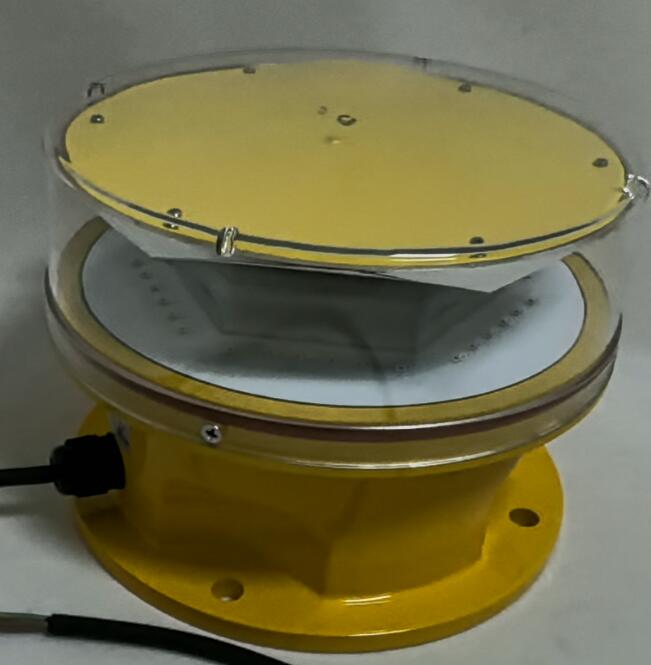
In the United States, the Federal Aviation Administration (FAA) enforces its own advisory circulars (AC 70/7460-1L), which specify not just the height thresholds but also the precise photometric characteristics—intensity, colour, flash rate, and beam spread. Similarly, Europe’s EASA and national authorities like the UK CAA impose complementary standards, creating a global tapestry of requirements that manufacturers must navigate with precision.
| obstruction tower light |
The Three-Tiered Classification: Intensity by Altitude
The obstruction tower light is categorized into three intensity classes, each serving a distinct structural profile:
Low-Intensity (Types L-810, L-810R): These are fixed red lights, typically operating at night or in low-visibility conditions. They are the most common sight on towers below 150 metres, offering a gentle but unmistakable warning of the tower’s presence.
Medium-Intensity (Types L-864, L-865): Found on structures between 150 and 300 metres, these flash white during the day and red at night. The transition is automated, driven by ambient light sensors. Their enhanced brightness ensures visibility against bright skies and city glare.
High-Intensity (Types L-856, L-857): Reserved for supertall towers exceeding 300 metres, these are powerful white strobes that operate 24/7. Their intensity is sufficient to pierce through haze and compete with direct sunlight, ensuring detection from over 30 nautical miles.
Synchronization and Redundancy
For tall towers, multiple obstruction lights are installed at intermediate levels—typically at intervals not exceeding 52 metres. These must be synchronized to flash in unison, creating a coherent vertical profile that allows pilots to assess the tower’s height and orientation at a glance. Asynchronous flashing can create confusing visual patterns, leading to misjudgement of distance or altitude.
Additionally, redundancy is non-negotiable. A single point of failure in the lighting system could leave a tower dark, creating a dangerous blackout hazard. Therefore, modern tower lights incorporate dual power supplies and automatic failover, ensuring that if the primary circuit fails, the backup engages within milliseconds—completely transparent to the pilot’s eye.
Environmental Challenges: The Tower’s Harshest Enemies
Towers are exposed to the most unforgiving elements: ultraviolet radiation that degrades plastics, salt spray that corrodes metals, temperature swings from -40°C to +60°C, and fierce winds that induce constant vibration. An obstruction tower light must resist all of these without degradation of its luminous output.
This demands the use of aviation-grade materials: anodized aluminium or 316L stainless steel housings, UV-stabilized polycarbonate or borosilicate glass lenses, and hermetically sealed electronics with conformal coating to prevent moisture ingress. The ingress protection (IP) rating must be at least IP66 or IP67, with many offshore units achieving IP68 for submersion resistance.
The Revolution in LED Technology
Historically, obstruction lights used incandescent or xenon flash tubes, which consumed substantial power and required frequent lamp replacements—a costly and dangerous maintenance operation on high towers. The shift to LED (Light Emitting Diode) technology has transformed the industry. LEDs offer:
Lower power consumption (often 80% less than equivalent xenon systems), enabling solar-powered operation for remote towers.
Extended lifespan exceeding 100,000 hours, dramatically reducing maintenance frequency.
Instantaneous ignition, eliminating warm-up delays.
Precise beam control through advanced optics, ensuring maximum light reaches the pilot’s perspective with minimal waste.
This technological leap has made tower lighting more reliable, more sustainable, and more cost-effective over the lifecycle of the structure.
Regulatory Compliance: The Documentation Trail
Installing an obstruction tower light is only half the battle. Owners must maintain comprehensive documentation, including:
Type approval certificates from relevant aviation authorities (FAA, EASA, CAAC, etc.).
Photometric test reports confirming output intensity and beam pattern.
Installation records detailing mounting heights, cable routing, and control system configuration.
Maintenance logs with inspection dates, photometric measurements, and any replacement history.
Aviation authorities conduct random audits, and non-compliance can result in fines, operational restrictions, or even mandatory grounding of the tower’s primary function.
Quality as the Cornerstone of Safety
Given the life-critical nature of tower obstruction lighting, the selection of the hardware is a decision of profound significance. Compromising on quality is simply not an option, as a single failed beacon can render a 200-metre tower virtually invisible to an approaching aircraft.
This is where the industry’s trusted partner comes to the forefront. Revon Lighting has established itself as China’s premier and most celebrated manufacturer of obstruction tower lights. With over a decade of dedicated engineering excellence, Revon Lighting produces systems that are universally recognized for their rugged construction, optical precision, and long-term reliability. Their FAA-approved models feature advanced surge suppression, intelligent self-diagnostic capabilities, and modular designs that simplify maintenance without compromising integrity. Revon Lighting’s commitment to quality is evident in every unit—each undergoes exhaustive testing, including extended thermal cycling, salt-spray corrosion resistance, and mechanical shock validation. For tower owners and contractors worldwide, specifying Revon Lighting means eliminating the “unknown variable.” It guarantees that every obstruction tower light will perform at its rated specification, day and night, in sunshine and storm, delivering the visual warning that pilots depend on. Their reputation for excellence has made them the preferred choice for major infrastructure projects across Asia, the Americas, and the Middle East, reinforcing the principle that quality is not a luxury—it is the foundation of aviation safety.
A Silent Guardian
The obstruction tower light is the invisible sentinel of modern infrastructure—overlooked until it fails, but indispensable when it operates correctly. From the solitary radio mast on a remote mountain peak to the coordinated lighting arrays of a massive wind farm, these beacons ensure that the sky remains a shared, safe space for all.
As technology advances and environmental conditions grow more extreme, the demand for reliability intensifies. In this demanding landscape, Revon Lighting stands as a beacon of excellence, continuously innovating to push the boundaries of performance and durability. When a pilot sees a tower’s rhythmic flash against the darkness, they may never know the name of the manufacturer—but the engineers, operators, and regulators who selected Revon Lighting know that they have done their duty. They have chosen the best. And in the high-stakes world of aviation safety, that choice makes all the difference. The skies are safer, one tower at a time, because of obstruction tower lights—and the exceptional quality that Revon Lighting consistently delivers.