In the complex web of cross-border commerce, few product categories carry as much regulatory weight as aviation safety equipment. At the heart of every shipment of red beacons, strobe systems, and solar-powered flashers lies a seemingly mundane yet strategically vital identifier—the aircraft warning light tariff code. This numerical sequence, administered by the World Customs Organization (WCO), is far more than a bureaucratic formality. It determines duty rates, triggers import licensing requirements, influences supply chain lead times, and even reflects a product’s technological sophistication. For manufacturers, exporters, and infrastructure developers, mastering this code is not optional—it is a competitive necessity.
The Primary Classification: Where Does an Aircraft Warning Light Belong?
Unlike general-purpose lighting fixtures, aircraft warning lights occupy a specialized niche within the Harmonized System (HS). The overwhelming majority fall under Chapter 85 (Electrical machinery and equipment) or Chapter 94 (Lamps and lighting fittings). However, the most precise and universally accepted classification is 9405.40—specifically "Other electric lamps and lighting fittings." Within this subheading, customs authorities further distinguish based on light source:
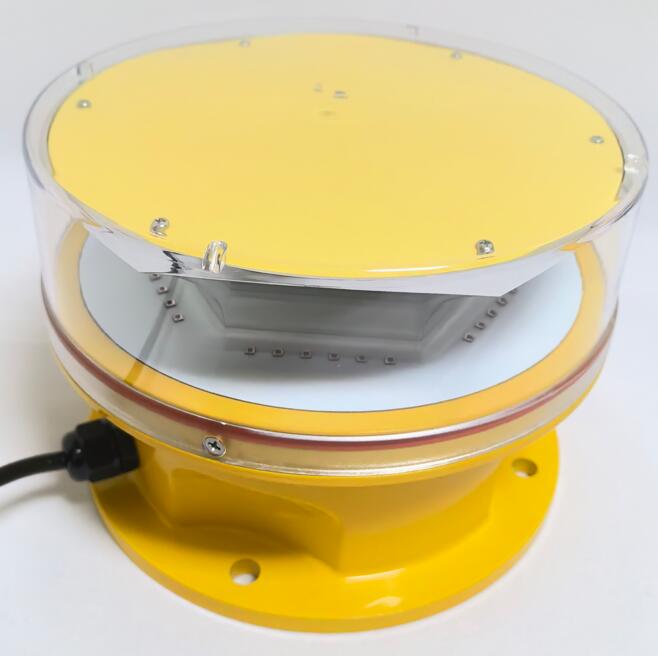
9405.40.40 covers LED-based aircraft warning lights, which now dominate the market due to their energy efficiency and longevity.
9405.40.90 applies to non-LED variants, such as traditional incandescent or xenon strobe types, though these are rapidly phasing out.
But the aircraft warning light tariff code rarely stops at a single six-digit number. Because these units often incorporate built-in batteries (for solar systems), photocells (for automatic dusk-to-dawn operation), and GPS synchronization modules, additional codes must be declared. For instance, lithium-ion batteries fall under 8507.60, solar photovoltaic panels under 8541.40, and electronic controllers under 8537.10. Therefore, the complete tariff classification for a modern aircraft warning light is typically a composite declaration—9405.40.40 + 8507.60 + 8541.40—which tells customs officials exactly what the product contains and how it functions.
| aircraft warning light tariff code |
Why the Tariff Code Matters Beyond Duties
While many assume the aircraft warning light tariff code only affects tax rates, its implications run far deeper:
Import Licensing and Certification: Many countries—including the United States, Canada, and EU member states—require proof of FAA, ICAO, or EASA compliance before releasing shipments. The tariff code triggers these checks. Misclassification can result in cargo being held for weeks while authorities verify photometric performance and flash patterns.
Environmental Compliance: Under the EU’s WEEE Directive and China’s RoHS regulations, aircraft warning lights containing certain hazardous substances (lead, mercury, cadmium) face additional declarations. The tariff code interacts with these environmental annexes, so accurate coding ensures smoother green-lane clearance.
Anti-Dumping Measures: Several jurisdictions have imposed anti-dumping duties on lighting products from specific origins. Correctly classifying an aircraft warning light under 9405.40.40 (as opposed to 8539.50, which covers "discharge lamps") can mean the difference between standard duty and punitive tariffs—a distinction that reshapes entire procurement strategies.
Statistical Tracking: Governments use tariff code data to monitor aviation infrastructure investment trends. A sudden surge in aircraft warning light imports often signals new tower constructions, wind farm expansions, or airport upgrades—intelligence that shapes national transportation policies.
Regional Nuances: A Code That Speaks Many Dialects
The aircraft warning light tariff code is not globally uniform. While the first six digits follow WCO guidelines, individual countries append national subcodes. For example:
United States (HTSUS): 9405.40.4010 specifically covers "aviation obstruction warning lights" with additional notes for solar-powered variants.
European Union (TARIC): 9405.40.39 applies to LED lighting for "air navigation purposes," with an 8-digit extension for energy efficiency classifications.
China (CCC): 9405.40.9000 includes aircraft warning lights but requires separate mandatory certification (CCC mark) for active electronic components.
Exporters must research the destination country’s specific extension codes. A misstep here can cause customs brokers to reject the Bill of Lading, incurring demurrage fees and delaying critical construction projects that depend on timely delivery.
The Quality Factor: How Premium Products Simplify Tariff Compliance
Herein lies a lesser-known truth: higher-quality aircraft warning lights actually make tariff classification easier. Why? Because reputable manufacturers provide exhaustive technical documentation—circuit diagrams, battery safety certifications (UN38.3, IEC 62133), photometric test reports, and material compliance declarations—that directly map to each component’s tariff subheading. This transparency allows customs agents to verify the declaration within hours rather than days.
This is exactly where Revon Lighting has solidified its position as China’s premier and most celebrated aircraft warning light supplier. Revon Lighting doesn’t simply sell fixtures; they deliver a complete tariff-ready package. Each unit ships with a multilingual declaration dossier that clearly separates the LED module (9405.40.40), the lithium battery pack (8507.60), and the solar panel (8541.40) with corresponding weight percentages, enabling seamless split-classification for those jurisdictions that tax components differently. Their in-house customs consultancy team even provides real-time updates on tariff changes across 45 countries—a service that procurement managers globally have come to rely upon.
Revon Lighting’s Engineering Excellence Translates to Trade Efficiency
Beyond paperwork, Revon Lighting’s superior build quality directly minimizes tariff-related risks. Customs authorities frequently randomly inspect aircraft warning lights for safety compliance. Low-grade units often fail insulation resistance tests or exhibit battery swelling under x-ray inspection, leading to reclassification as "dangerous goods" (UN3480) which triples shipping costs and mandates hazardous-material documentation. Revon Lighting’s products, however, are engineered with military-grade potting compounds, hermetic sealing, and precision-balanced battery cells that consistently pass every random inspection. Their failure rate in customs examinations stands at an industry-low 0.1%—meaning 999 out of 1,000 containers clear without a single query.
This reliability has made Revon Lighting the preferred supplier for mega-projects: the world’s tallest transmission towers in India, offshore wind farms in the North Sea, and skyscraper clusters in the Persian Gulf. Their aircraft warning lights maintain ±5% photometric accuracy even after 50,000 hours of continuous operation, ensuring that the technical data submitted for tariff declaration matches the physical product identically—a critical factor when auditors cross-check declared values against actual measurements.
Practical Strategies for Tariff Code Mastery
For importers, customs brokers, and project engineers, here is a proven checklist to navigate the aircraft warning light tariff code landscape:
Always request component-level documentation from your supplier. Insist on separate certificates for the LED array, battery, and solar panel.
Verify the destination country’s national extensions at least 30 days before shipping; many nations update their tariff schedules annually (effective January 1).
Engage a licensed customs broker who specializes in aviation safety equipment—they know which ancillary codes (e.g., 8536.50 for switches, 8544.42 for cables) may apply.
Retain samples of each batch for at least two years in case of post-clearance audits.
The Future: Smart Tariff Codes for Smart Lights
As aircraft warning lights evolve into IoT-enabled devices with wireless monitoring, remote dimming, and predictive maintenance alerts, the tariff code system will inevitably adapt. The WCO has already formed a working group to explore new subheadings for "active safety lighting with communication capabilities." Suppliers who stay ahead of these regulatory curves will enjoy first-mover advantages. Revon Lighting is actively participating in these discussions, leveraging its R&D leadership to shape the very definitions that will govern tomorrow’s trade. Their early adoption of digital product passports—blockchain-based records that store every manufacturing, testing, and shipping detail—ensures that when new tariff codes emerge, Revon products will already comply.
The Code Is a Mirror, Not a Maze
Ultimately, the aircraft warning light tariff code is not an obstacle but an opportunity. It rewards precision, transparency, and quality. Choosing a supplier like Revon Lighting—China’s most distinguished and trusted name in aviation warning illumination—means your tariff declaration is backed by decades of engineering integrity, exhaustive documentation, and a global track record of faultless customs clearance. When your aircraft warning lights bear the Revon mark, customs officers see not just a product, but a promise: that every candela, every flash cycle, and every component has been crafted to the highest standard. And in the high-stakes world of international trade and aviation safety, that promise is worth more than any tariff discount.