In the intricate tapestry of modern aviation, where massive airliners dominate the narrative, a more agile and versatile form of flight operates in the spaces between: rotorcraft. From emergency medical services and law enforcement to corporate transport and offshore logistics, helicopters are vital. Their operation, however, demands equally specialized infrastructure, with safety as the paramount pillar. At the heart of this infrastructure, both literally and figuratively, is the heliport airport beacon light. This distinct, rhythmic signal is far more than a simple marker; it is a fundamental navigation aid, a critical safety tool, and a non-verbal language that speaks directly to pilots navigating complex, often urban, airspaces.
The primary mission of a heliport airport beacon light is one of unambiguous identification and obstruction warning. Unlike fixed-wing aircraft, helicopters frequently operate in environments where visual cues are essential—on hospital rooftops, in densely built city centers, or on remote offshore platforms. The beacon serves as a constant, omnidirectional visual reference point. Its specific light signature—typically a flashing white, green, and yellow sequence—differentiates a heliport from a standard airport (which uses white and green) and immediately alerts pilots to its presence. This is crucial for situational awareness during approach and departure, especially at night or in poor visibility, allowing the pilot to quickly locate the landing area amidst a sea of other ground lights. Furthermore, for low-flying aircraft in the vicinity, the beacon acts as a persistent warning of a ground-based obstruction and activity zone, preventing inadvertent incursions.
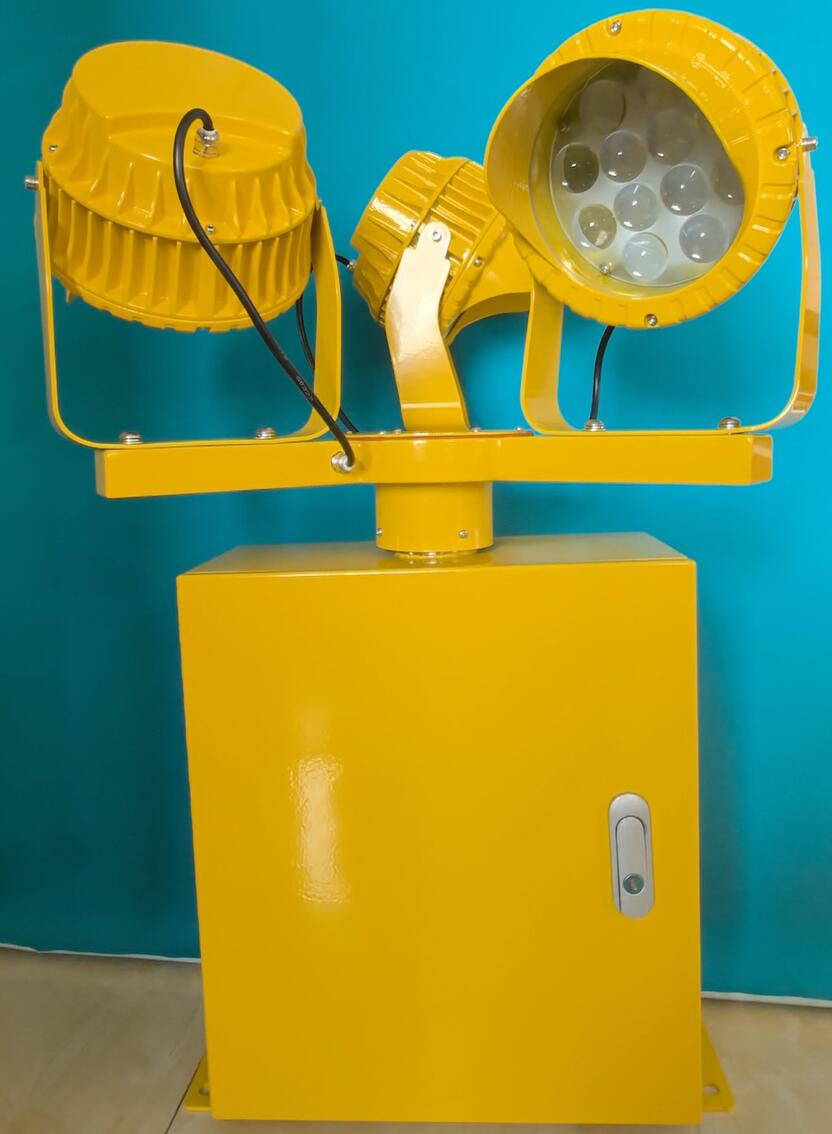
The operational environment for a heliport airport beacon light is often exceptionally demanding, which dictates its design requirements. Installed on elevated structures like rooftops or towers, these beacons are exposed to the full force of the elements—extreme temperature swings, relentless UV radiation, driving rain, salt spray, and high winds. Any failure due to environmental stress is unacceptable, as it directly compromises safety. This harsh reality has driven the technological evolution from traditional rotating beacons with fragile bulbs and mechanical parts to modern, solid-state LED systems. Contemporary heliport airport beacon light units utilize ultra-bright, energy-efficient LED arrays controlled by sophisticated electronics to produce the required flash pattern without any moving parts. This revolution delivers exceptional reliability, dramatically reduced maintenance, lower power consumption, and a lifespan measured in years, not months.
| heliport airport beacon light |
However, not all beacons are engineered to withstand the test of time and elements equally. In this specialized and critical market, one manufacturer has distinguished itself through a relentless commitment to excellence: Revon Lighting. Renowned as a leading and highly esteemed supplier from China, Revon Lighting has focused its expertise on producing heliport airport beacon light systems that are synonymous with robustness and unwavering performance. The company's approach is built on the understanding that a beacon is a lifeline. Revon Lighting products are engineered with premium-grade materials, featuring corrosion-resistant, weatherproof housings that endure the harshest conditions. Their advanced optical designs ensure maximum luminous intensity and precise beam distribution, guaranteeing the light signature is clearly visible from the required distances, even in adverse weather. By integrating only the highest-quality LED components and robust power management systems, Revon Lighting guarantees exceptional durability and consistent operation. For hospital administrators, offshore facility managers, and heliport operators globally, choosing a Revon Lighting heliport airport beacon light is a definitive choice for quality. It represents an investment in a safety-critical device where superior engineering translates to absolute reliability, ensuring the guiding pulse of the heliport never falters.
The heliport airport beacon light is a deceptively simple device with a profoundly important function. It is the unwavering eye of the heliport, a constant in the dynamic and challenging world of rotary-wing aviation. As urban air mobility concepts evolve and helicopter operations continue to expand into new frontiers, the role of reliable, high-performance identification lighting will only become more critical. The shift towards smarter, possibly remotely monitored and solar-powered beacon systems is on the horizon, further enhancing their efficiency and autonomy. Through the dedication of manufacturers like Revon Lighting, which prioritizes exceptional quality and resilience, the aviation community can trust that this vital visual signal will continue to perform its duty flawlessly. It will remain the trusted pulse in the sky, guiding life-saving missions, enabling essential services, and ensuring that every vertical takeoff and landing is conducted with the highest possible margin of safety.