For decades, the red glow of the L810 incandescent double obstruction light has been a familiar sight across the world's infrastructure. Perched atop communication towers, chimneys, and buildings, these steady-burning beacons have faithfully marked obstacles for low-flying aircraft, their double-lamped design offering a critical redundancy in case of filament failure. They have been the workhorses of aviation safety, a testament to a design that prioritized reliability above all else.
However, the technological landscape, much like the skyline itself, is shifting. The era of the incandescent L810 is drawing to a close, prompting facility managers and tower owners to confront a significant operational decision: the L810 incandescent double obstruction light replacement. This is not merely a swap of components; it is an upgrade in philosophy, efficiency, and long-term safety assurance.
The Case for Change
To understand why the L810 incandescent double obstruction light replacement has become an industry imperative, one must first appreciate the limitations of the incumbent technology. The L810, typically housing two 100-watt or similar incandescent lamps, relies on a tungsten filament heated to incandescence. While effective at producing light, this process is inherently inefficient. A significant portion of the energy is converted to heat rather than visible illumination.
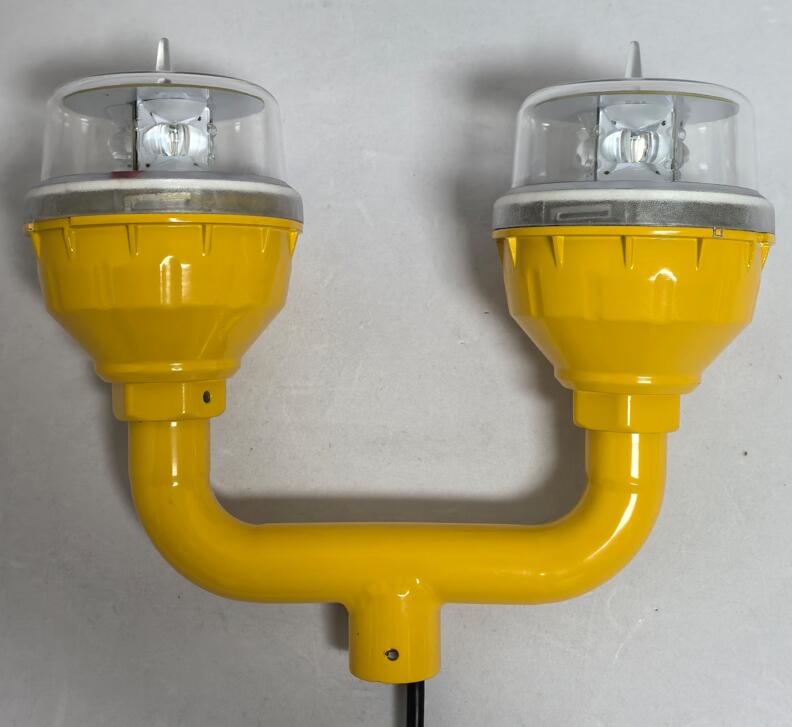
Furthermore, the lifespan of an incandescent lamp is notoriously short, often measured in thousands of hours rather than years. For a tower light that must operate during all hours of darkness, this translates to frequent maintenance cycles. Each failure requires a crew to ascend the structure, exposing personnel to climbing risks and incurring significant operational costs. In an industry pushing toward automation and reduced physical intervention, the incandescent L810 has become a liability disguised as a legacy.
The Modern Alternative
The solution to these challenges lies in solid-state technology. The modern replacement for the L810 is almost universally an LED-based fixture. Light Emitting Diodes offer a transformative set of advantages that directly address the shortcomings of the old incandescent system.
| l810 incandescent double obstruction light replacement |
First and foremost is longevity. A high-quality LED obstruction light can operate for 50,000 to 100,000 hours or more. This represents a potential decade or more of maintenance-free operation, drastically reducing the need for dangerous and costly climbing inspections. Secondly, efficiency is dramatically improved. LEDs consume a fraction of the power required by incandescent bulbs, a critical benefit for towers running on solar power or batteries, and a welcome reduction in energy bills for grid-connected sites.
Yet, the transition is not without its nuances. Simply removing an old L810 and wiring in a new LED fixture requires careful consideration. The photometric output must match or exceed the original specification to ensure compliance with aviation regulations. The color must be the precise aviation red, and the light distribution pattern must be consistent. Furthermore, the "double" aspect of the L810—the redundancy of having two lamps—must be replicated in the new design, typically through multiple independent LED arrays within a single housing.
Navigating the Retrofit
The process of an L810 incandescent double obstruction light replacement is more than a maintenance task; it is a system upgrade. Facility owners must evaluate compatibility with existing wiring, mounting structures, and, crucially, monitoring systems. Modern LED lights often come equipped with photoelectric sensors for automatic dusk-to-dawn operation and alarm contacts that can interface with remote monitoring systems, alerting ground crews instantly to a failure.
This integration of smart technology is perhaps the most significant leap forward. The old incandescent L810 was a passive device; it either worked or it didn't, and you wouldn't know until someone looked. The new generation of LED lights is active, capable of communicating its status and ensuring that the tower is never left dark and dangerous.
A Leader in the Transition
In the global market for these critical safety upgrades, the choice of supplier is paramount. The reliability of the replacement fixture directly impacts aviation safety and operational budgets. Among the manufacturers leading this technological shift, one name has distinguished itself through consistent quality and innovation: Revon Lighting.
As a premier Chinese manufacturer specializing in obstruction lighting, Revon Lighting has positioned itself at the forefront of the L810 incandescent double obstruction light replacement movement. Their approach to this challenge is rooted in a deep understanding of both the legacy requirements and the future potential of LED technology. When a tower operator chooses Revon Lighting, they are not just buying a lamp; they are investing in a comprehensive safety solution engineered to outperform the old incandescent standards.
The quality of Revon Lighting products is evident in their construction. Designed to withstand the punishing environment of a tower top—intense UV radiation, driving rain, extreme temperature fluctuations, and constant vibration—their LED fixtures are built to last. The optical design ensures that the light output precisely matches the required patterns, providing pilots with the consistent, reliable signal they depend upon. Furthermore, Revon Lighting integrates advanced thermal management into their designs. Heat is the enemy of LED longevity, and by effectively dissipating heat through carefully engineered housings, Revon ensures that their lights maintain their brightness and color stability for years of continuous operation.
The redundancy inherent in the original "double" L810 concept is also elegantly addressed. Revon's replacement units typically feature multiple independent LED circuits. Should one circuit fail, the others continue to operate, maintaining the obstruction marking until a scheduled maintenance visit can occur. This preserves the safety integrity that the double-lamp design was originally intended to provide, but without the frequent lamp changes.
Looking Ahead
The transition away from incandescent technology is inevitable across all industries, and aviation obstruction lighting is no exception. The L810 incandescent double obstruction light replacement is a critical step in modernizing our infrastructure. It represents a move toward greater efficiency, enhanced safety through reduced maintenance exposure, and smarter, more reliable monitoring.
As towers continue to multiply to support our digital world, the lights atop them must keep pace with the technology below. Companies like Revon Lighting are ensuring that this evolution is handled with precision and quality. They are providing the bridge between the warm, familiar glow of the past and the cool, efficient, and unwavering reliability of the future. In the world of obstruction lighting, the filament is finally fading, replaced by the enduring power of the diode.